
Canoelands NSW 2157
Canoelands is a small rural suburb in Sydney’s Upper North Shore and Hornsby region, postcode 2157, governed by Hornsby Shire Council. It sits in a bushland and national park setting with a strong separate-house character and no apartment stock. The area is quiet and scenic, with limited buses, no train, metro, ferry or light rail, and long public transport travel to the CBD. Safety is rated strong, retail and walkability are limited, and local character is distinctly rural residential. Residents are predominantly Australian-born, with household income generally around average. Major shopping needs are typically served by nearby centres in Hornsby and Castle Towers.
The mix of houses and apartments that make up the Canoelands NSW 2157 property market, and the sale price range each achieved over the past 12 months.
How close Canoelands NSW 2157 properties sit to major roads or rail, and how much traffic noise that brings compared to properties set back from them.
Train, metro, light rail, ferry and B-Line services accessible from Canoelands NSW 2157.
"Houses" in this report includes detached houses, duplexes, and terraces.
See which key planning overlays and environmental risks affect this suburb before you buy.
The share of Canoelands NSW 2157 houses within easy walking distance (1.2km) of a train station.
Typical land characteristics and common property features across Canoelands NSW 2157.
How property prices vary across the different pockets of Canoelands NSW 2157, and how each pocket compares.


2 popular houses in Canoelands NSW 2157
Where apartment projects are concentrated across Canoelands NSW 2157, with project-level sales context.
Median age, household income, and the renter-versus-owner split that shape the Canoelands NSW 2157 community.
Get the knest.ai app
Gain ultimate insights into any property
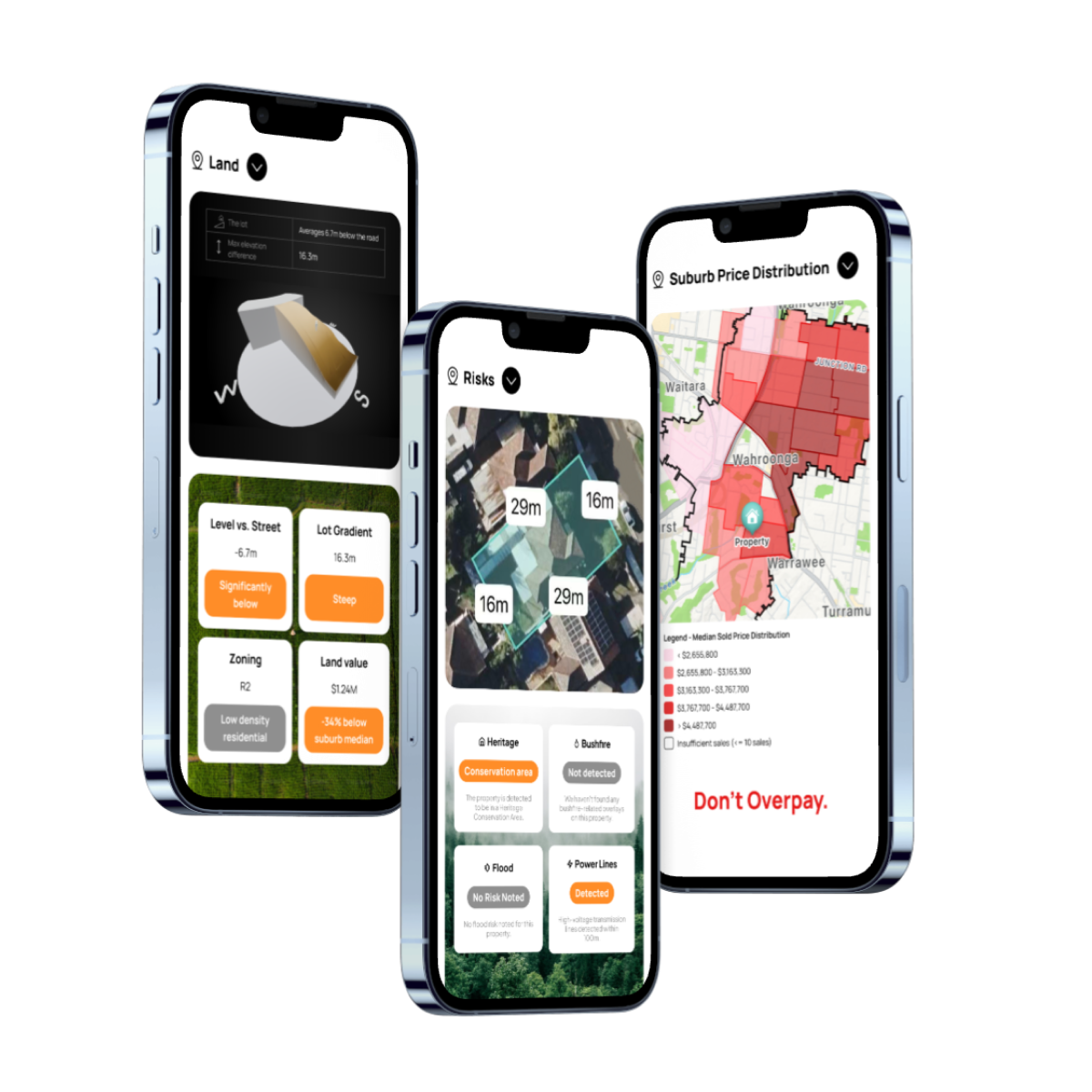
Buyer-focused property platform identifying risks, price estimates, 3D land maps and more to help you make smarter decisions — completely free.

Living in Canoelands NSW 2157: Suburb Profile & FAQs
Common questions about living in and buying property in Canoelands NSW 2157 — lifestyle, transport, schools, and the housing market.
Note: Data is sourced from the Australian Bureau of Statistics (ABS) 2021 Census data and knest.ai internal statistical data.
Is Canoelands NSW 2157 a good suburb for families?
Canoelands NSW 2157 is a solid rather than standout option for families, especially for buyers who want space, privacy and a quieter bushland setting. The suburb has a strong safety rating of 4 out of 5, a high share of children aged 5 to 14 at 17.4%, and an average household size of 2.7, which suggests established family households are part of the local mix. Housing is also heavily family-oriented in form, with separate houses making up 100% of homes and no apartment stock. That said, the family picture is not completely straightforward. Primary school results look very strong at 10 out of 10, but the suburb’s lifestyle is quite rural and less convenient day to day, with low walkability and retail scores. So Canoelands can suit families who prioritise land, calm surroundings and a house-based lifestyle, but it may feel less practical for buyers who want quick errands, more local activity or easier access to a wider range of schooling and services.
What is it like to live in Canoelands NSW 2157?
Living in Canoelands NSW 2157 feels rural, quiet and bush-focused, with a strong sense of separation from denser suburban Sydney. Its character is described as rural residential, and the surrounding setting is shaped by bushland and nearby national park areas, which gives the suburb a natural, low-density feel rather than an urban one. For buyers who want breathing room, privacy and a slower pace, that can be a real draw. At the same time, Canoelands is not a convenience-led suburb. Walkability is just 1 out of 5, retail is 1 out of 5, and culture is 2 out of 5, so day-to-day living is likely to rely more on planning ahead and getting in the car than strolling to shops or cafés. In practical terms, the Canoelands lifestyle suits buyers who value space and quiet over amenity, while those wanting an active village atmosphere may find the trade-off too pronounced.
Is Canoelands NSW 2157 well connected for commuting?
Canoelands NSW 2157 is less convenient for commuting, especially if you rely heavily on public transport. The suburb has no train, no metro and no light rail service, while bus availability is limited rather than extensive. That shows up clearly in the travel times: the average public transport commute to the Sydney CBD is around 150 minutes, compared with about 65 minutes by car. For most city workers, that means Canoelands is not a strong fit for a daily CBD commute by public transport. The upside is that buyers who work from home, travel less often, or mainly move around by car may still find the location workable, especially if they are choosing lifestyle and land over transport convenience. In that sense, the suburb’s transport picture is not a deal-breaker for every buyer, but it is a genuine trade-off and one that commuters should weigh carefully before buying in Canoelands.
Who does Canoelands NSW 2157 suit best?
Canoelands NSW 2157 suits buyers who want a detached house lifestyle, more space around them, and a quieter semi-rural environment rather than a high-convenience suburb. The housing mix is very clear: 100% separate houses and no apartments, so Canoelands is naturally more appealing to house buyers than to those looking for low-maintenance unit living. It also appears relatively tightly held, with only 8.9% of homes rented, which often points to a more established owner-occupier feel. The median age is 41, and the suburb’s job profile is mixed across trades, community and personal service workers, and professionals, so it does not read as narrowly prestige-driven or purely investor-led. For buyers, that means Canoelands may work well for families, upgraders or lifestyle-driven households who value privacy and land. It is likely to suit downsizers, apartment buyers or CBD-first professionals less well, because the trade-off for that space is lower convenience and fewer nearby amenities.
What are the pros and cons of living in Canoelands NSW 2157?
The main trade-off in Canoelands NSW 2157 is simple: you get space, safety and a bushland setting, but you give up a lot of convenience. On the positive side, Canoelands has a safety rating of 4 out of 5, a fully detached housing profile, and a rural residential character next to bushland and national park areas. For buyers wanting privacy, a calmer pace and a house on larger land, those are meaningful strengths. The compromise is that everyday amenity is limited. Walkability is 1 out of 5, retail is 1 out of 5, public transport is weak, and CBD commuting is lengthy, especially without a car. That means buyers who want cafés, shops, frequent transport and a more connected suburban rhythm may find the suburb restrictive. Even so, Canoelands can still be a very good fit for the right buyer, particularly households prioritising lifestyle, outdoor space and separation from denser parts of Sydney.
What are property prices like in Canoelands NSW 2157?
Property prices in Canoelands NSW 2157 are hard to characterise from recent sales alone, because there were no suburb-level sales statistics returned in the latest six-month history search. In practical buyer terms, that usually points to a very small or tightly held market rather than a mainstream, high-turnover suburb where pricing is easy to benchmark every few weeks. For anyone buying property in Canoelands, that means you should expect less pricing transparency than in larger Sydney suburbs, and individual homes may need to be judged more on land, setting, access and house condition than on a long list of directly comparable recent sales. The housing mix also matters here: Canoelands is an all-house suburb, so there is no apartment market providing a lower entry point. The trade-off is clear. Buyers seeking space and a bushland lifestyle may still see value in Canoelands, but they should be prepared for a niche market where due diligence on each property becomes especially important.
30 surrounding suburbs near Canoelands NSW 2157
6 streets in Canoelands NSW 2157