
Chullora NSW 2190
Chullora, NSW 2190, is a suburb in Sydney’s Canterbury-Bankstown region governed by the City of Canterbury Bankstown. It is best known as an industrial and logistics precinct rather than a traditional residential suburb, with an urban built-up setting and low tree canopy cover of 13.86%. Public transport access is serviceable, with many bus services and nearby rail access on the T6 line, while typical CBD travel is about 60 minutes by public transport and 30 minutes by car. The suburb is served by Chullora Marketplace. Household income appears below average, and aircraft noise can be a consideration in parts of the wider Sydney flight network.
The mix of houses and apartments that make up the Chullora NSW 2190 property market, and the sale price range each achieved over the past 12 months.
How close Chullora NSW 2190 properties sit to major roads or rail, and how much traffic noise that brings compared to properties set back from them.
Train, metro, light rail, ferry and B-Line services accessible from Chullora NSW 2190.
"Houses" in this report includes detached houses, duplexes, and terraces.
See which key planning overlays and environmental risks affect this suburb before you buy.
The share of Chullora NSW 2190 houses within easy walking distance (1.2km) of a train station.
The 20-year trend in median house sale prices across Chullora NSW 2190, tracked separately from apartments.
Typical land characteristics and common property features across Chullora NSW 2190.
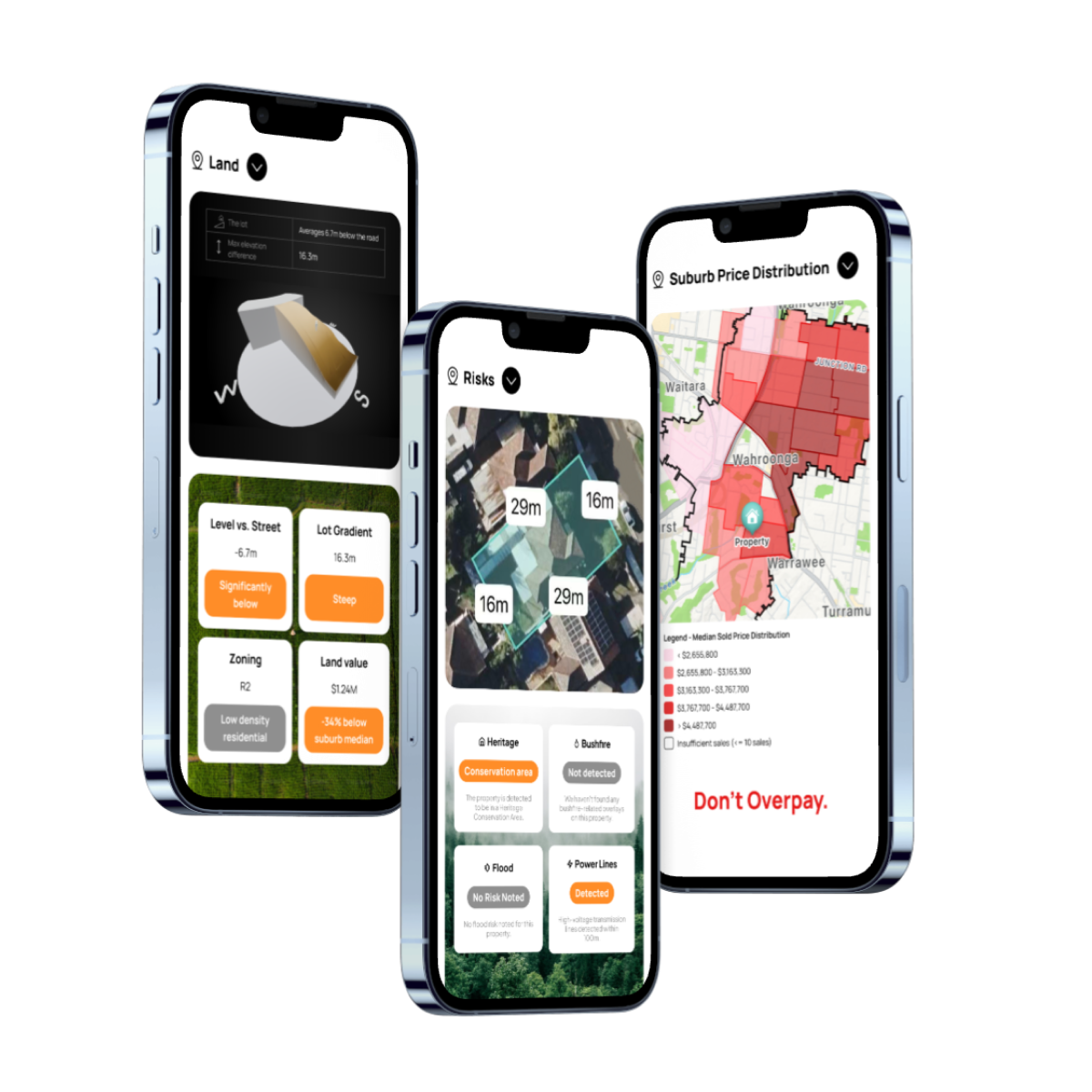
How property prices vary across the different pockets of Chullora NSW 2190, and how each pocket compares.


Where apartment projects are concentrated across Chullora NSW 2190, with project-level sales context.
Median age, household income, and the renter-versus-owner split that shape the Chullora NSW 2190 community.
Get the knest.ai app
Gain ultimate insights into any property
Buyer-focused property platform identifying risks, price estimates, 3D land maps and more to help you make smarter decisions — completely free.

Living in Chullora NSW 2190: Suburb Profile & FAQs
Common questions about living in and buying property in Chullora NSW 2190 — lifestyle, transport, schools, and the housing market.
Note: Data is sourced from the Australian Bureau of Statistics (ABS) 2021 Census data and knest.ai internal statistical data.
Is Chullora NSW 2190 a good suburb for families?
Chullora NSW 2190 is a weaker option for families if your priority is a classic family-friendly suburb with strong schools, a calm residential feel and plenty of house choice. The clearest reason is that the suburb’s school ratings are very low, with primary at 8 out of 5 and secondary at 10 out of 5 not reading like a normal residential school market, and the suburb profile itself is defined more as an industrial and logistics precinct than a family-oriented neighbourhood. Safety sits at 2 out of 5, which suggests buyers should be measured rather than assume Chullora is especially good for kids or long-term family living. Housing mix data is also limited here, which fits the broader picture that Chullora is not a typical house-dominated family suburb. That said, some buyers may still consider Chullora for practical reasons such as location and road access, but for most family buyers, especially those focused on schools and everyday neighbourhood amenity, it would usually be a compromise choice.
What is it like to live in Chullora NSW 2190?
Living in Chullora NSW 2190 feels practical, urban and heavily work-oriented rather than village-like or residential. The suburb sits in the Canterbury–Bankstown region and its character is best described as an industrial and logistics precinct, so day-to-day life is shaped more by warehouses, commercial activity and movement than by cafe strips, leafy streets or a strong local lifestyle scene. That is reflected in the low walkability score of 2 out of 5, retail at 1 out of 5 and culture at 1 out of 5. Tree canopy is also low at 13.86%, so Chullora does not read as especially green. For some buyers, that can still work if they value central positioning and a no-frills base over atmosphere. The trade-off is clear though: Chullora lifestyle is more functional than aspirational, so buyers looking for charm, local buzz or a relaxed family-suburb feel will probably find it lacking.
Is Chullora NSW 2190 well connected for commuting?
Chullora NSW 2190 is reasonably well connected for commuting, but the transport picture is mixed rather than seamless. Public transport access is helped by many bus services and nearby train access via the T6 connection, and the average public transport commute to the Sydney CBD is about 60 minutes. Driving is much quicker at around 30 minutes, which tells you Chullora is more convenient for buyers who expect to rely on a car. There is no metro, no light rail and no ferry, so this is not one of those Sydney suburbs with multiple premium transport options at the doorstep. In practical terms, Chullora can work for commuters who want reasonable access across the broader metro area and do not mind combining buses, nearby rail and driving. The trade-off is that public transport convenience is only moderate, so daily CBD commuters wanting a straightforward train-based routine may prefer suburbs with their own station and stronger walk-up transport access.
Who does Chullora NSW 2190 suit best?
Chullora NSW 2190 suits best buyers who are focused on practicality, access and function rather than lifestyle appeal or prestige. The suburb profile points to an area shaped by employment land and transport movement, and the leading occupation categories include managers, professionals, and technicians and trades workers, which suggests a mixed working population rather than a highly lifestyle-led residential market. Median income figures are not available here in a meaningful way, and the housing mix also does not present Chullora as a typical established family suburb or apartment lifestyle hub. That makes it more relevant to buyers who care about location efficiency, commercial proximity or a straightforward base in the Canterbury–Bankstown region. It is likely to suit less well buyers chasing a leafy environment, strong everyday walkability, strong school positioning or a more traditional neighbourhood feel. In other words, Chullora can suit the right practical-minded buyer, but it is not the obvious fit for most lifestyle-driven owner-occupiers.
What are the pros and cons of living in Chullora NSW 2190?
The main trade-off in Chullora NSW 2190 is that you get practical positioning and commuting utility, but you give up quite a lot in day-to-day neighbourhood lifestyle. On the plus side, Chullora has many bus services, nearby train access and a fairly manageable 30-minute average drive to the Sydney CBD, which can appeal to buyers who value movement across Sydney more than local atmosphere. On the downside, the suburb scores only 2 out of 5 for walkability, 1 out of 5 for retail, 1 out of 5 for culture and 2 out of 5 for safety, while canopy cover is just 13.86%. That combination points to a built-up, functional environment rather than a suburb people choose for charm, greenery or convenience on foot. Buyers who mainly care about a practical base may accept that compromise. Buyers who want cafes, stronger local shopping, a more peaceful feel or a classic residential streetscape are the ones most likely to feel the downside.
What are property prices like in Chullora NSW 2190?
Property prices in Chullora NSW 2190 are hard to read as a normal suburb market because recent sales data is effectively absent in the available suburb-level history. In practical buyer terms, that usually means Chullora is not trading like a typical owner-occupier suburb with a steady flow of comparable house and apartment sales. Because of that, it would be risky to frame Chullora as clearly affordable, mid-range or expensive in the way buyers often compare mainstream Sydney suburbs. What the lack of recent sales evidence does suggest is that buying property in Chullora may require extra care around comparables, use case and asset type, especially if you are trying to judge house prices in Chullora or whether Chullora is expensive relative to nearby residential suburbs. The trade-off is that a more unusual market can sometimes appeal to highly specific buyers, but for most buyers it creates more uncertainty, which means due diligence matters more than a simple suburb median.
10 surrounding suburbs near Chullora NSW 2190
7 streets in Chullora NSW 2190