
Dangar Island NSW 2083
Dangar Island, NSW 2083, is a small Hawkesbury River suburb in Sydney’s Upper North Shore and Hornsby Shire Council area, known for its alternative island community, natural setting and ferry-based access. The suburb has 303 residents, a median age of 50, 100% separate houses, no apartments, and a relatively low rental share. Australia is the leading birth country and English the top ancestry. Family income appears below average. Environmental features are river and creek surrounds, with ferry access but no train, metro, light rail or bus services in the suburb. Public transport to the Sydney CBD is about 105 minutes.
The mix of houses and apartments that make up the Dangar Island NSW 2083 property market, and the sale price range each achieved over the past 12 months.
How close Dangar Island NSW 2083 properties sit to major roads or rail, and how much traffic noise that brings compared to properties set back from them.
Train, metro, light rail, ferry and B-Line services accessible from Dangar Island NSW 2083.
"Houses" in this report includes detached houses, duplexes, and terraces.
How house lots across Dangar Island NSW 2083 sit relative to street level — topography that affects drainage, flood risk, privacy, and build cost.
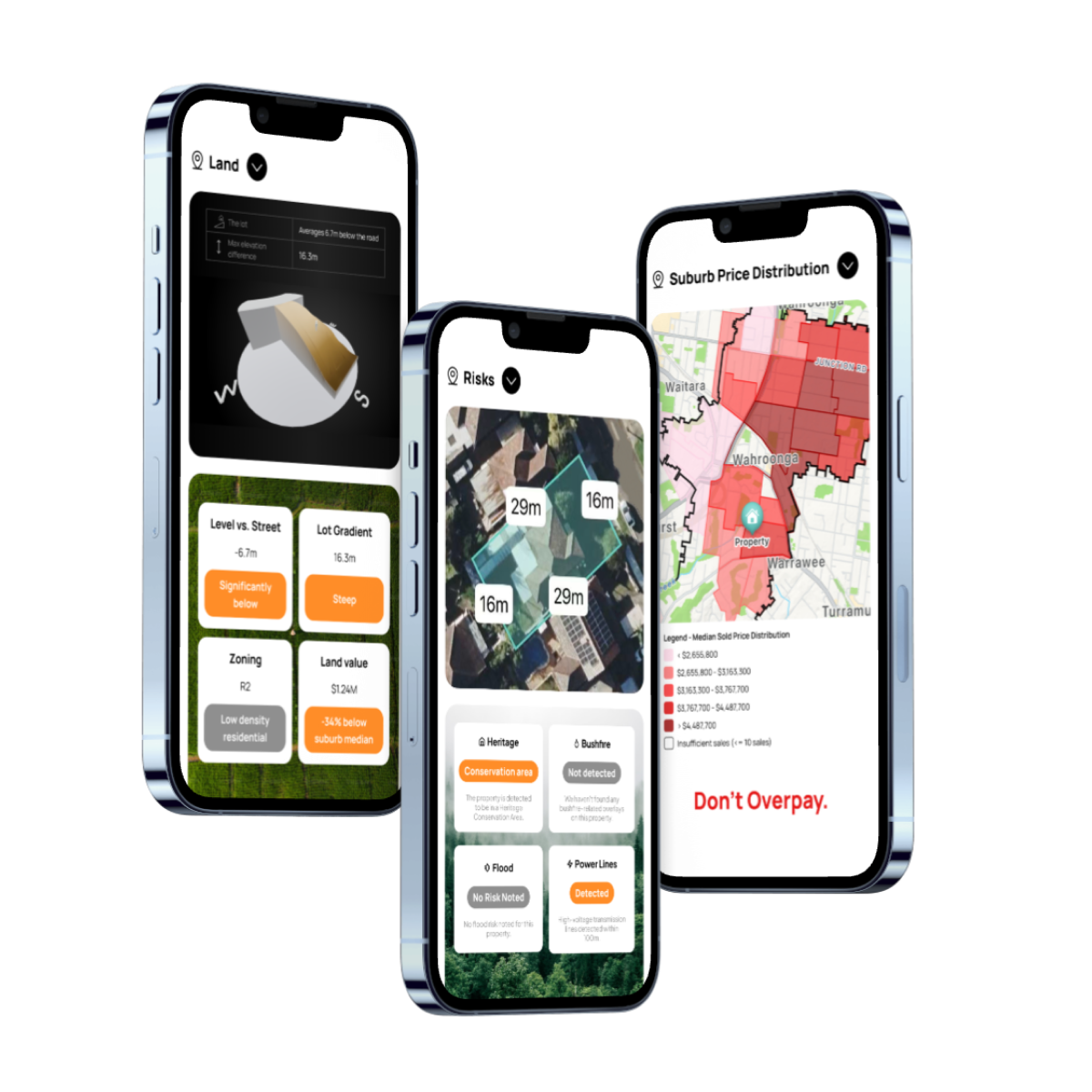
See which key planning overlays and environmental risks affect this suburb before you buy.
The share of Dangar Island NSW 2083 houses within easy walking distance (1.2km) of a train station.
The 20-year trend in median house sale prices across Dangar Island NSW 2083, tracked separately from apartments.
Typical land characteristics and common property features across Dangar Island NSW 2083.
How property prices vary across the different pockets of Dangar Island NSW 2083, and how each pocket compares.
The top 3 highest house sales in Dangar Island NSW 2083 over the past 24 months.


8 popular houses in Dangar Island NSW 2083
Where apartment projects are concentrated across Dangar Island NSW 2083, with project-level sales context.
Median age, household income, and the renter-versus-owner split that shape the Dangar Island NSW 2083 community.
Get the knest.ai app
Gain ultimate insights into any property
Buyer-focused property platform identifying risks, price estimates, 3D land maps and more to help you make smarter decisions — completely free.

Living in Dangar Island NSW 2083: Suburb Profile & FAQs
Common questions about living in and buying property in Dangar Island NSW 2083 — lifestyle, transport, schools, and the housing market.
Note: Data is sourced from the Australian Bureau of Statistics (ABS) 2021 Census data and knest.ai internal statistical data.
Is DANGAR ISLAND NSW 2083 a good suburb for families?
DANGAR ISLAND NSW 2083 is a mixed rather than a strong suburb for families. The housing profile is almost entirely separate houses, which usually suits buyers wanting more space, and around 16.9% of residents are aged 5 to 14, so there is a visible school-age child population. That said, the average household size is 2.3 and the median age is 50, which points to a smaller, older community overall rather than a suburb dominated by young families. Safety sits at 2 out of 5, and the available school data is limited, so buyers looking for a classic family-friendly suburb with strong schools and an easy everyday setup may find DANGAR ISLAND less straightforward. It may still appeal to families who value a unique community feel, water setting and detached housing, but the trade-off is a more niche lifestyle and less conventional convenience than many family-focused Sydney suburbs.
What is it like to live in DANGAR ISLAND NSW 2083?
Living in DANGAR ISLAND NSW 2083 feels alternative, quiet in spirit and quite removed from mainstream suburban Sydney. The suburb’s character is described as an alternative island community, and its river setting clearly shapes the lifestyle. Culture scores 4 out of 5, which suggests a place with personality and a distinct local identity rather than a generic residential area. At the same time, retail and walkability are both 1 out of 5, so this is not a suburb where daily convenience is the main draw. Buyers considering DANGAR ISLAND should think more in terms of lifestyle, privacy and community atmosphere than easy access to shops, errands or urban amenity. Safety is 2 out of 5, which adds another note of caution for buyers wanting a more settled, predictable suburban feel. For the right buyer, though, DANGAR ISLAND offers an uncommon Sydney lifestyle that is hard to replicate elsewhere.
Is DANGAR ISLAND NSW 2083 well connected for commuting?
DANGAR ISLAND NSW 2083 is less convenient than most Sydney suburbs for commuting. Public transport travel to the CBD is about 105 minutes on average, and driving is around 90 minutes, so this is clearly not one of Sydney’s easier commuter locations. The suburb has no train, no metro, no light rail and no bus service listed, although it does have ferry access, which is an important part of how residents connect in and out. For buyers asking about public transport, the answer is that DANGAR ISLAND is functional rather than highly connected, and commuting will usually require more planning than in rail-based suburbs. This makes it better suited to people with flexible work patterns, semi-retired buyers or those who do not need a frequent CBD trip. The trade-off is obvious: you get a unique island lifestyle, but you give up speed and simplicity in the daily commute.
Who does DANGAR ISLAND NSW 2083 suit best?
DANGAR ISLAND NSW 2083 suits best buyers who want a distinctive lifestyle suburb rather than a standard convenience-led purchase. The housing stock is entirely separate houses, apartments are effectively absent, and the rental share is about 23.9%, which suggests a relatively owner-oriented market without feeling overly transient. The resident profile leans mature, with a median age of 50, and professionals and managers make up a large share of occupations, with managers and professionals together at roughly 57.6%. That points to a community that may appeal to established buyers, lifestyle upgraders, creatives, remote workers and people who prioritise setting and character over daily access to services. Median weekly personal income of $735 and family income of $1,850 suggest a mixed economic profile rather than a purely prestige market. It may suit large active families or buyers needing urban convenience less well, especially if regular commuting and nearby retail matter a lot.
What are the pros and cons of living in DANGAR ISLAND NSW 2083?
The main trade-off in DANGAR ISLAND NSW 2083 is that you get a highly distinctive island lifestyle, but you give up a lot of everyday convenience. On the plus side, DANGAR ISLAND has a very unusual sense of character, with culture scoring 4 out of 5 and a fully detached housing profile that gives it a very different feel from apartment-heavy Sydney suburbs. The river setting also adds to its lifestyle appeal for buyers who want something more peaceful, personal and unconventional. On the other hand, walkability and retail both score just 1 out of 5, transport options are limited, and commuting times to the CBD are long. Safety is also only 2 out of 5, which some buyers will weigh carefully. These disadvantages of living in DANGAR ISLAND will matter most to families wanting convenience and commuters needing speed, but buyers seeking lifestyle over efficiency may still see real value here.
What are property prices like in DANGAR ISLAND NSW 2083?
Property prices in DANGAR ISLAND NSW 2083 are hard to benchmark cleanly from recent sales because there were no suburb-level sales statistics returned in the recent history data. In practical buyer terms, that usually means this is a tightly held or low-turnover market where comparable evidence can be limited, and that can make buying property in DANGAR ISLAND feel less straightforward than in higher-volume suburbs. Because the suburb is entirely house-based rather than apartment-led, buyers are typically assessing house value, land component and lifestyle scarcity more than entry-level unit pricing. The trade-off is that limited transaction evidence can make price expectations harder to judge, especially for buyers who like lots of recent comparable sales before making an offer. For the right buyer, that rarity can be part of the appeal, but it does mean house prices in DANGAR ISLAND may require more careful deal-by-deal assessment rather than relying on broad suburb averages alone.
16 surrounding suburbs near Dangar Island NSW 2083
5 streets in Dangar Island NSW 2083