
Port Botany NSW 2036
Port Botany, NSW 2036, is a small waterfront suburb in Sydney’s City & Eastern Suburbs region, about 12 km south of the CBD, within Randwick City Council. It is defined by port and industrial uses rather than a traditional residential village feel, with harbour frontage and very low tree canopy. Transport is limited by rail-free local access, though driving to the CBD is relatively quick. Westfield Eastgardens is the main major shopping centre serving the area. Household income figures are not reliable here, so they are omitted. Aircraft and broader transport-related noise can be a noticeable factor around Port Botany.
The mix of houses and apartments that make up the Port Botany NSW 2036 property market, and the sale price range each achieved over the past 12 months.
How close Port Botany NSW 2036 properties sit to major roads or rail, and how much traffic noise that brings compared to properties set back from them.
Train, metro, light rail, ferry and B-Line services accessible from Port Botany NSW 2036.
"Houses" in this report includes detached houses, duplexes, and terraces.
See which key planning overlays and environmental risks affect this suburb before you buy.
The share of Port Botany NSW 2036 houses within easy walking distance (1.2km) of a train station.
Typical land characteristics and common property features across Port Botany NSW 2036.
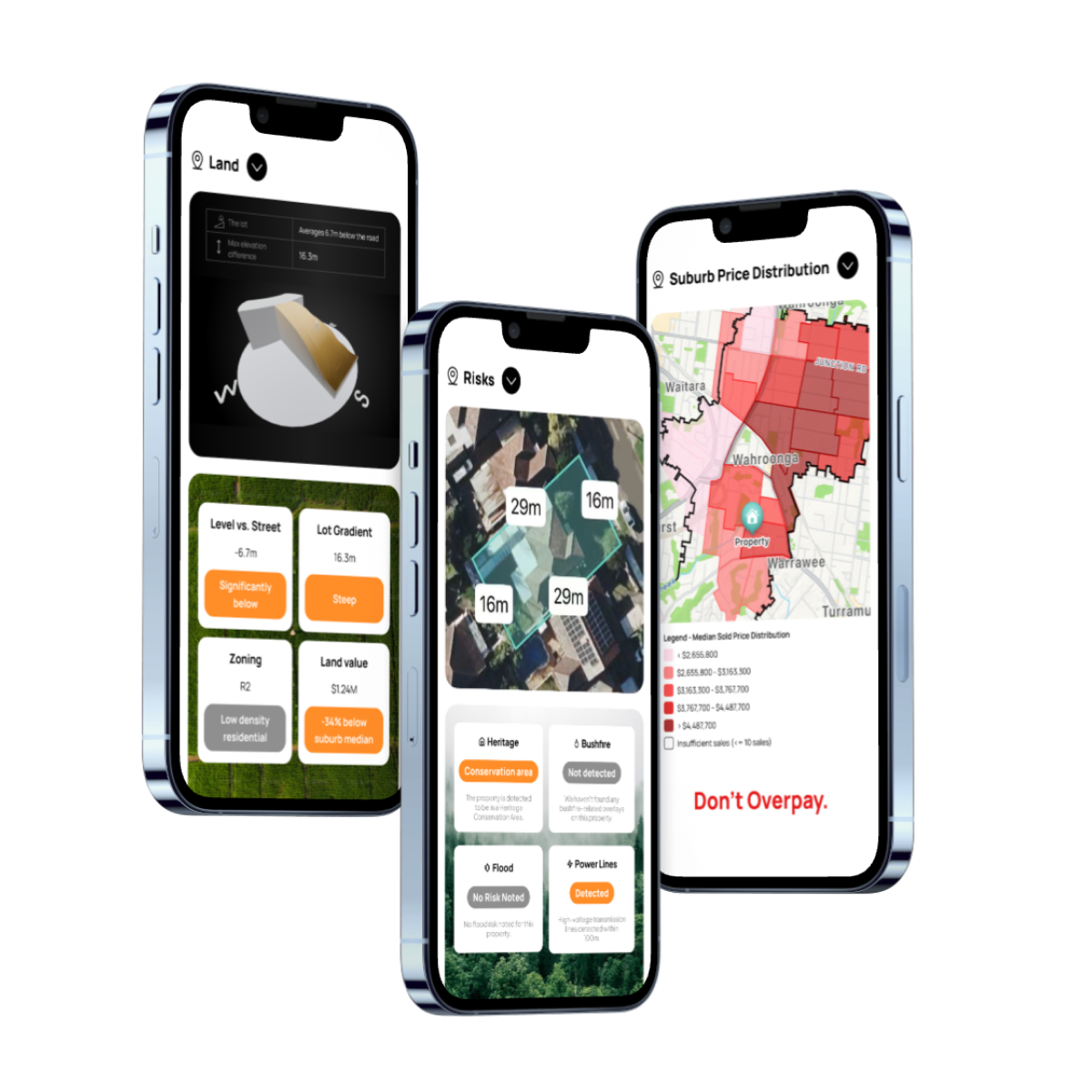
How property prices vary across the different pockets of Port Botany NSW 2036, and how each pocket compares.


Where apartment projects are concentrated across Port Botany NSW 2036, with project-level sales context.
The median weekly rent for apartments in Port Botany NSW 2036.
Median age, household income, and the renter-versus-owner split that shape the Port Botany NSW 2036 community.
Get the knest.ai app
Gain ultimate insights into any property
Buyer-focused property platform identifying risks, price estimates, 3D land maps and more to help you make smarter decisions — completely free.

Living in Port Botany NSW 2036: Suburb Profile & FAQs
Common questions about living in and buying property in Port Botany NSW 2036 — lifestyle, transport, schools, and the housing market.
Note: Data is sourced from the Australian Bureau of Statistics (ABS) 2021 Census data and knest.ai internal statistical data.
Is Port Botany NSW 2036 a good suburb for families?
Port Botany NSW 2036 looks like a weaker option for most families. The suburb’s available data points to a very unusual residential profile, with an average household size of 0, no meaningful house or apartment share shown, and no visible child age-group base to suggest an established family community. Safety sits at 2 out of 5, which means buyers looking for a classic family-friendly suburb with a settled neighbourhood feel, stronger schools and safety, and a more obvious local family presence will probably find better matches elsewhere. On the school side, the education ratings shown are very high, but those numbers sit alongside a suburb character that is clearly port and industrial rather than family-oriented day to day. That is the key trade-off in Port Botany: access to the eastern suburbs location comes with a far more specialised, non-traditional living environment that will suit only a narrow group of buyers.
What is it like to live in Port Botany NSW 2036?
Living in Port Botany NSW 2036 would feel highly urban, industrial, and functional rather than leafy, village-like, or residential. The suburb character is explicitly port and industrial, and that comes through in the lifestyle picture: canopy cover is just 2.07%, while walkability, retail, and culture are each 1 out of 5. In everyday terms, this is not the kind of suburb where most buyers would expect a café strip, a walk-everywhere routine, or a strong neighbourhood atmosphere. Port Botany does sit in the City & Eastern Suburbs region and has harbour or waterfront positioning, which gives it geographic interest, but the data suggests the lifestyle is shaped far more by infrastructure and industry than by local amenity. That is the main trade-off. Buyers who value practicality, access to major employment zones, or a very specific eastern suburbs foothold may still see appeal, but lifestyle-led owner-occupiers will likely find Port Botany too limited.
Is Port Botany NSW 2036 well connected for commuting?
Port Botany NSW 2036 is mixed to less convenient for commuting, depending on how much flexibility you have. Driving access looks reasonably strong, with an average trip to the Sydney CBD of about 20 minutes, which is competitive by Sydney standards. Public transport is much less compelling, with a CBD commute of around 65 minutes and no train, no metro, no light rail, no ferry, and only limited bus service shown in the suburb data. For buyers who drive regularly, Port Botany can still work as a practical base in the eastern suburbs. For buyers who want strong public transport, easy train access, or a simple commute into the city without relying on a car, it is a weaker fit. That trade-off matters. Port Botany is better suited to buyers whose routines are car-based or tied to nearby industrial, logistics, airport, or port-related employment rather than daily rail commuters.
Who does Port Botany NSW 2036 suit best?
Port Botany NSW 2036 suits a narrow group of buyers best, particularly those who prioritise location practicality over neighbourhood lifestyle. The occupation profile points toward managers, professionals, and trades-related workers, which suggests the suburb’s appeal is more functional than aspirational in the usual residential sense. At the same time, the income and age figures available are not meaningful enough to paint a conventional household profile, and the housing mix shown does not present Port Botany as a normal house-led or apartment-led buyer market. That makes it a very specialised suburb rather than a broad one. Buyers who may still consider Port Botany are those with work nearby, those comfortable with an industrial setting, or those making a very deliberate trade-off to stay close to eastern suburbs infrastructure. It is likely to suit lifestyle-focused families, walkability seekers, and buyers wanting a classic neighbourhood atmosphere much less well.
What are the pros and cons of living in Port Botany NSW 2036?
The main trade-off in Port Botany NSW 2036 is simple: you get strong road access in an eastern suburbs location, but you give up a lot of the lifestyle qualities many buyers usually want. On the plus side, Port Botany is close in geographic terms, with a CBD driving commute of around 20 minutes, and its harbour-side setting gives it a strategically located feel. On the downside, the suburb scores just 1 out of 5 for walkability, retail, and culture, has limited bus service, no rail-based transport, very low canopy cover at 2.07%, and a safety rating of 2 out of 5. In practical terms, this is not a suburb for buyers chasing greenery, convenience on foot, or a vibrant local scene. Still, Port Botany may suit buyers who care more about transport by car, work access, and a highly practical location than about traditional suburban lifestyle features.
What are property prices like in Port Botany NSW 2036?
Property prices in Port Botany NSW 2036 are hard to read as a normal suburb market because there are effectively no recent suburb-level sales results returned for the last six months. In buyer terms, that usually suggests a very thin market rather than a clear affordable, mid-range, expensive, or premium pattern you can rely on with confidence. For anyone buying property in Port Botany, that matters because low transaction evidence makes it harder to benchmark house prices in Port Botany or compare value cleanly with nearby suburbs. It can also mean less guidance on how competitive the market really is and whether asking prices line up with recent outcomes. The trade-off is that a tightly transacted or unusual suburb can occasionally appeal to buyers with very specific location needs, but most buyers will want to compare Port Botany closely against nearby eastern suburbs markets where pricing evidence is much clearer.
26 surrounding suburbs near Port Botany NSW 2036
7 streets in Port Botany NSW 2036