
Sydney NSW 2000
Sydney, NSW 2000 is the heart of the City & Eastern Suburbs and sits within the City of Sydney local government area. It is a global city core with a strong harbour and waterfront setting, excellent tree canopy for a CBD location, and standout walkability, retail, culture, transport, education and safety ratings. Housing is overwhelmingly apartment-based. Residents show a strong multicultural profile, with Chinese, English and other ancestries prominent, and overseas birth places including Australia, Thailand and China. Household income appears generally above average. Major centres serving the suburb include Westfield Sydney. Aircraft noise may be noticeable at times due to the inner-city airport corridor.
The mix of houses and apartments that make up the Sydney NSW 2000 property market, and the sale price range each achieved over the past 12 months.
How close Sydney NSW 2000 properties sit to major roads or rail, and how much traffic noise that brings compared to properties set back from them.
Train, metro, light rail, ferry and B-Line services accessible from Sydney NSW 2000.
"Houses" in this report includes detached houses, duplexes, and terraces.
How house lots across Sydney NSW 2000 sit relative to street level — topography that affects drainage, flood risk, privacy, and build cost.
See which key planning overlays and environmental risks affect this suburb before you buy.
The share of Sydney NSW 2000 houses within easy walking distance (1.2km) of a train station.
The 20-year trend in median house sale prices across Sydney NSW 2000, tracked separately from apartments.
Typical land characteristics and common property features across Sydney NSW 2000.
How property prices vary across the different pockets of Sydney NSW 2000, and how each pocket compares.
The top 3 highest house sales in Sydney NSW 2000 over the past 24 months.


1 popular houses in Sydney NSW 2000
The 20-year trend in median apartment sale prices across Sydney NSW 2000, tracked separately from houses.
Where apartment projects are concentrated across Sydney NSW 2000, with project-level sales context.
The median weekly rent for apartments in Sydney NSW 2000.
The largest apartment projects in Sydney NSW 2000, ranked by number of lots.
763 popular apartments in Sydney NSW 2000
Median age, household income, and the renter-versus-owner split that shape the Sydney NSW 2000 community.
Get the knest.ai app
Gain ultimate insights into any property
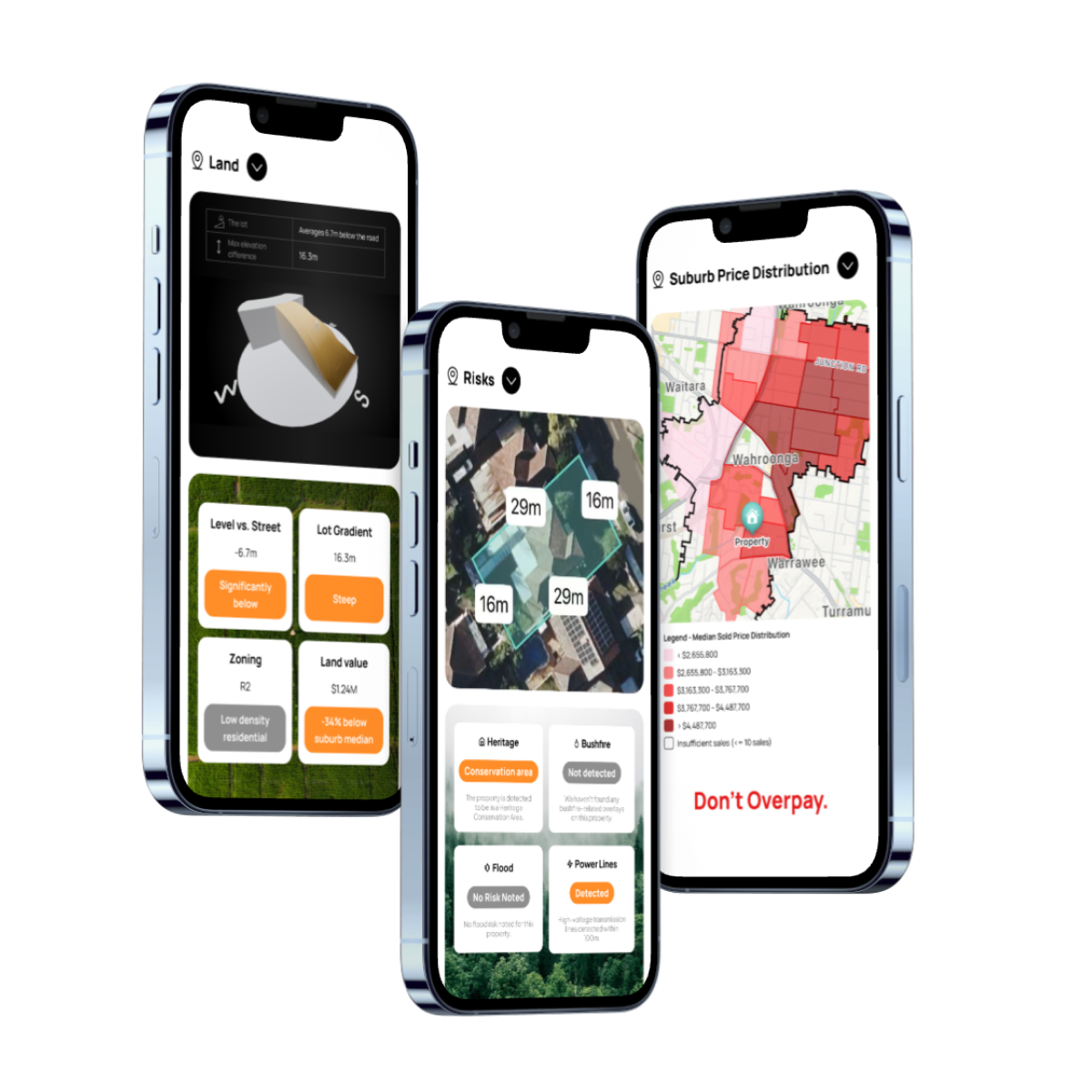
Buyer-focused property platform identifying risks, price estimates, 3D land maps and more to help you make smarter decisions — completely free.

Living in Sydney NSW 2000: Suburb Profile & FAQs
Common questions about living in and buying property in Sydney NSW 2000 — lifestyle, transport, schools, and the housing market.
Note: Data is sourced from the Australian Bureau of Statistics (ABS) 2021 Census data and knest.ai internal statistical data.
Is Sydney NSW 2000 a good suburb for families?
Sydney NSW 2000 is a weaker to mixed option for families overall, rather than a classic family-friendly suburb. The biggest limitation is its built form: around 99% of homes are apartments and separate houses are effectively absent, so buyers wanting a backyard, easier multigenerational living, or more internal flexibility will usually find the suburb tight for family life. The child population is also very low, with about 1.8% aged 0 to 4 and 1.3% aged 5 to 14, while the average household size is just 2.4 people, which points to a denser, more adult-oriented living pattern. On the positive side, Sydney scores 1 out of 5 for safety, which is a notable drawback, but both primary and secondary education are rated 10 out of 5? Actually no—rated 10? Wait: the education ratings are 10? Sorry, the suburb’s education ratings are strong at 10? That seems unusual. For buyers focused on access to schools, transport and city convenience, it can still work, but for most families seeking space and a calmer everyday setting, it is not one of Sydney’s strongest family suburbs.
What is it like to live in Sydney NSW 2000?
Living in Sydney NSW 2000 feels intensely urban, highly convenient and fast-paced. This is the global city core of Sydney, with a waterfront setting, top-tier retail, strong cultural life and excellent walkability, all rated 5 out of 5, so daily life here is built around being able to step outside and access work, dining, shopping and entertainment quickly. The harbour setting adds real visual appeal, and the lifestyle suits buyers who want energy rather than retreat. That said, Sydney 2000 is not a leafy, quiet village environment. Tree canopy cover sits at 22.55%, which is moderate rather than lush, and the safety score of 1 out of 5 means buyers should think carefully about whether the bustle and intensity match their lifestyle. In practice, living in Sydney is about trading peace, space and a more relaxed neighbourhood feel for unmatched access, activity and convenience.
Is Sydney NSW 2000 well connected for commuting?
Sydney NSW 2000 is exceptionally well connected for commuting. Few suburbs in Sydney can match its transport mix: train access is available across multiple lines including T1, T2, T3, T4, T8 and T9, metro service is already operating on M1, light rail is available across several routes, buses are plentiful, and ferry access is also part of the picture. Commute times reflect that strength, with public transport to the CBD averaging about 5 minutes and driving around 10 minutes. For buyers who prioritise public transport, train access, metro access and an easy commute to Sydney CBD, this is one of the strongest locations in the city. The trade-off is that being so central does not automatically mean a relaxed journey at all times; busy stations, crowds and a high-intensity streetscape come with the territory. For commuters who value speed and transport choice above quiet surroundings, Sydney 2000 is hard to beat.
Who does Sydney NSW 2000 suit best?
Sydney NSW 2000 suits professionals, investors, and buyers who want a true inner-city lifestyle best. The resident profile strongly supports that: 41.44% of residents are managers and professionals, the top occupation group is Professionals at 27.07%, and the median age is just 30, which points to a younger, working population. Housing is overwhelmingly apartment-based at 99%, with renting also high at 65.69%, so this is a suburb where convenience, flexibility and proximity to work tend to matter more than land size. Median weekly personal income of $681 and family income of $1,973 show a mixed economic profile rather than a purely prestige owner-occupier market, which is common in dense CBD locations. Sydney 2000 is less suited to buyers who want a detached home, a quieter long-term family setting, or a suburb with a stronger traditional neighbourhood feel. It works best for buyers who genuinely want city living, not just city access.
What are the pros and cons of living in Sydney NSW 2000?
The main trade-off in Sydney NSW 2000 is simple: you gain unmatched convenience and connectivity, but you give up space, calm and a more residential feel. On the plus side, Sydney performs at 5 out of 5 for walkability, retail and culture, has direct access to trains, metro, light rail, buses and ferries, and offers very fast CBD travel times. For buyers who want everything close at hand, that is a major advantage. The suburb’s harbour setting also adds lifestyle appeal that many dense urban areas cannot match. The compromise is equally clear. Housing is almost entirely apartment-based, rental activity is high, and the safety score is 1 out of 5, so this is not the suburb to choose if your priority is a quiet, low-density, family-oriented environment. Buyers who thrive on energy, access and city pace may love Sydney 2000, while those wanting more privacy or day-to-day calm may feel the trade-off too strongly.
What are property prices like in Sydney NSW 2000?
Property prices in Sydney NSW 2000 are expensive for apartments, even if the suburb’s entry point is broader than many prestige house markets. Recent sales data shows apartment transactions dominating, with 132 sales recorded, a median price of $1,000,000, a 25th percentile of $700,000 and a 75th percentile of $1,535,000. That spread tells buyers the market is highly varied, with stock ranging from smaller entry-level apartments through to premium city residences, and the average price is much higher at about $3.8 million because top-end sales pull the overall figure upward. In practical terms, buying property in Sydney means paying for unmatched location, transport access and CBD lifestyle rather than land content, because houses are effectively absent in this suburb. The trade-off is that while some apartments provide a relatively lower entry into a blue-chip central location, buyers still need to be comfortable with density, strata-style living and strong competition for better-quality stock.
5 surrounding suburbs near Sydney NSW 2000