knest.ai • Property intelligence for home buyers
Torrens Title vs Strata Title: What Duplex Buyers Check
Two duplexes on the same street can carry different titles, and the listing rarely says which. The title decides what you actually own, and who gets a vote on money you have to spend.
Two duplexes on the same street can carry different titles, one on Torrens title and one on strata title, and the listing rarely says which.
The difference is not cosmetic. One title type gives you a lot of land with your name on the register. The other gives you a defined part of a scheme, a share of common property, and a co-owner with a vote on what you both spend. The word “duplex” carries no title meaning on its own, so start from what a duplex is in Australia and let the title do the rest.
This guide covers what to check, and where the answer changes once you cross a state border.
- The title decides what you own, not the listing. A duplex can sit on two separate lots of land or inside a strata scheme.
- If a New South Wales property is strata, the strata plan must legally be part of the contract of sale (NSW Fair Trading, 2026). A missing plan is a question, not a detail.
- Two-lot strata is still strata: the scheme keeps records, holds meetings and holds an AGM each year, even with the reporting exemption (NSW Fair Trading, 2022).
- An attached duplex fails the exemption’s detachment limb, so scheme reporting on capital works and combined building insurance continues (NSW Fair Trading, 2022).
- The vocabulary changes at the border: green title and survey-strata in Western Australia, unit titles on leasehold in the ACT, body corporate in Queensland. Don’t read New South Wales rules across a border; a local conveyancer confirms where you stand.
What is the difference between Torrens title and strata title?
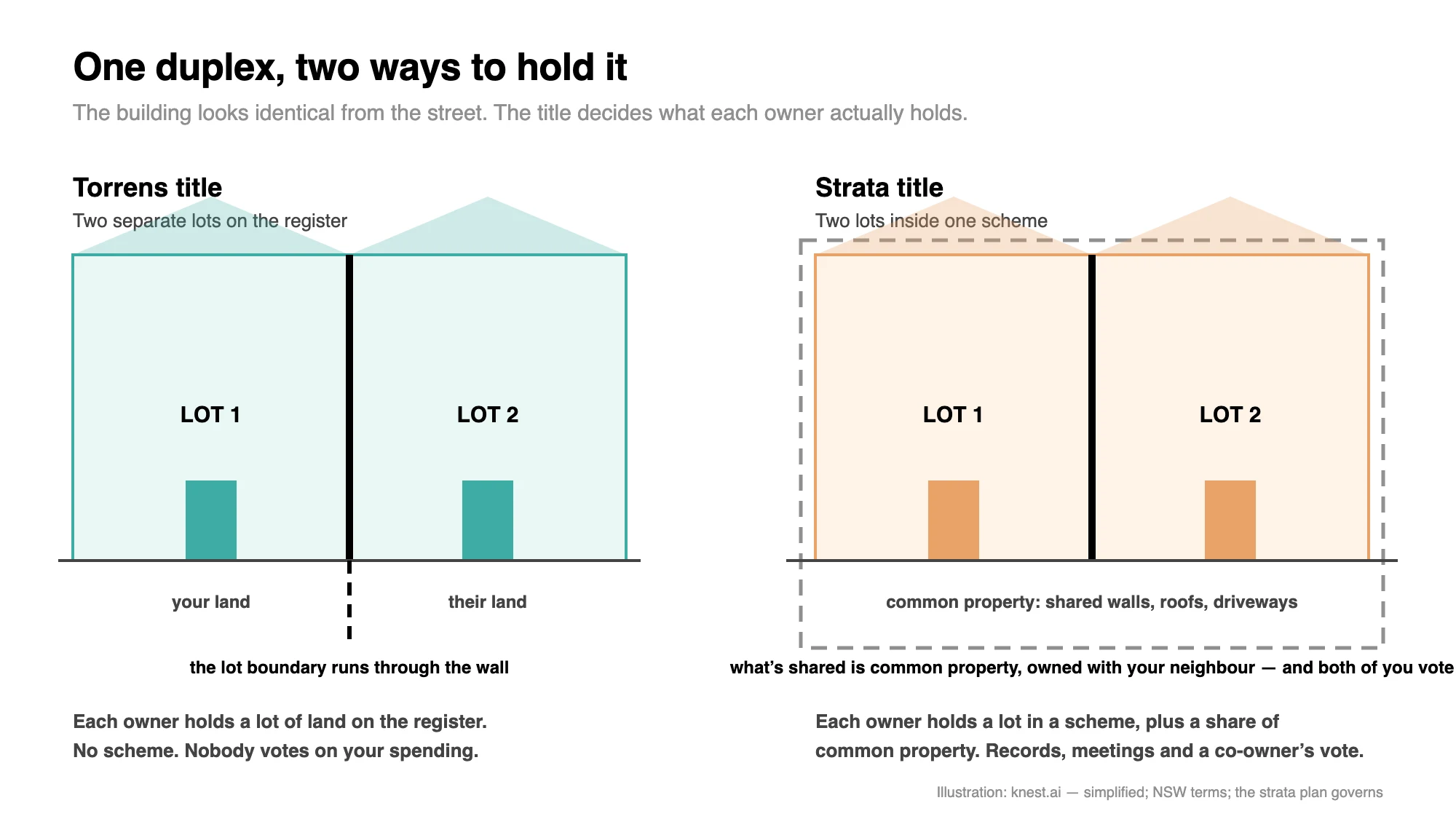
Torrens is the register itself, and strata is a scheme layered on top of it. In New South Wales the Torrens Title Register “defines the ownership and boundaries of properties” (Office of the Registrar General, undated). In Western Australia, Landgate (undated) confirms a scheme is registered “on and incorporated in the Register”.
The register is state-backed: the State “promises that the registered land owners recorded in the NSW land title system are the true owners of their land” (Office of the Registrar General, undated).
Strata works differently, and New South Wales sources define a strata scheme. No New South Wales source we located defines “strata title” as a standalone term, though WA and Victorian regulators use the phrase. A NSW strata scheme splits buildings, not just land, into lots (NSW Fair Trading, 2026). The category also catches townhouses, villas and semis. Buying a lot means you “share ownership of common property with other lot owners” (NSW Fair Trading, 2026). Inside a scheme “you own the inside of an individual property” (NSW Fair Trading, 2026). Common property is not only outdoor space: it runs to “shared gardens, external walls, roofs, driveways and stairwells” (2026).
And it “can change from one scheme to the next”, so check the strata plan and the by-laws (NSW Fair Trading, 2026).
How do you check whether a duplex is Torrens or strata title?
Start with the contract, then the register, and don’t rely on the listing alone.
The contract should hold the answer. In New South Wales it “will include the titling information affecting a strata lot and common property” (NSW Fair Trading, 2026). Ask the agent for a copy and have a conveyancer read it.
In New South Wales, a strata plan must be in the contract. The seller “must include a copy of the strata plan as part of the contract of sale. It is a legal requirement” (NSW Fair Trading, 2026). A missing plan means either a property outside a scheme, or a contract with a hole in it. Victoria discloses through the owners corporation certificate on the section 32 statement (Consumer Affairs Victoria, 2021). Queensland uses the community management statement (Queensland Government, 2026).
There is a public search. NSW Fair Trading (2025) runs a strata search returning “strata plan number, address, registration date, lot information”. Its map shades strata separately from “property other than strata (in yellow)”.
A nil result proves nothing. “No results found” may only mean the address is not the registered one (NSW Fair Trading, 2025). Treat a blank as unfinished.
One document exists only on the strata side. In a New South Wales scheme you can obtain a section 184 certificate. It shows “the financial health and structure of a strata scheme” (NSW Fair Trading, 2026). A Torrens lot has no equivalent, because there is no scheme to disclose.
Outside New South Wales the search has another name
South Australia calls a copy of a title “a 'Register Search'”, ordered through SAILIS (Land Services SA, undated). Queensland searches run through OTIS (Titles Queensland, undated). Tasmania files titles “under a volume/folio reference”, and anyone paying the fee can search one (Department of Natural Resources and Environment Tasmania, 2023 and 2021). In Western Australia, Landgate (undated) tells buyers to read the strata plan.
Your conveyancer confirms the title. Whether you need a conveyancer is worth settling early.
You can’t tell the title from the shared wall
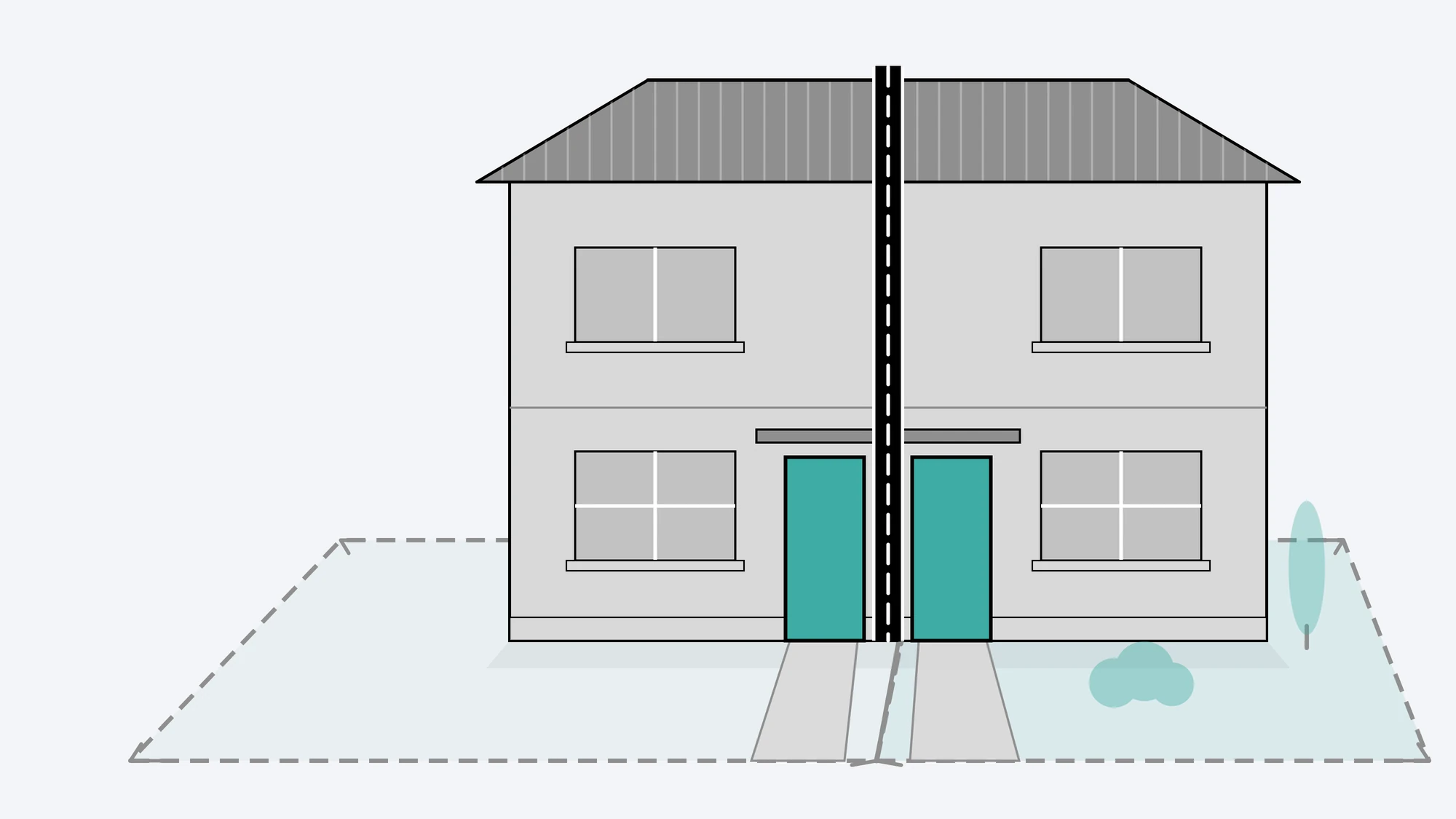
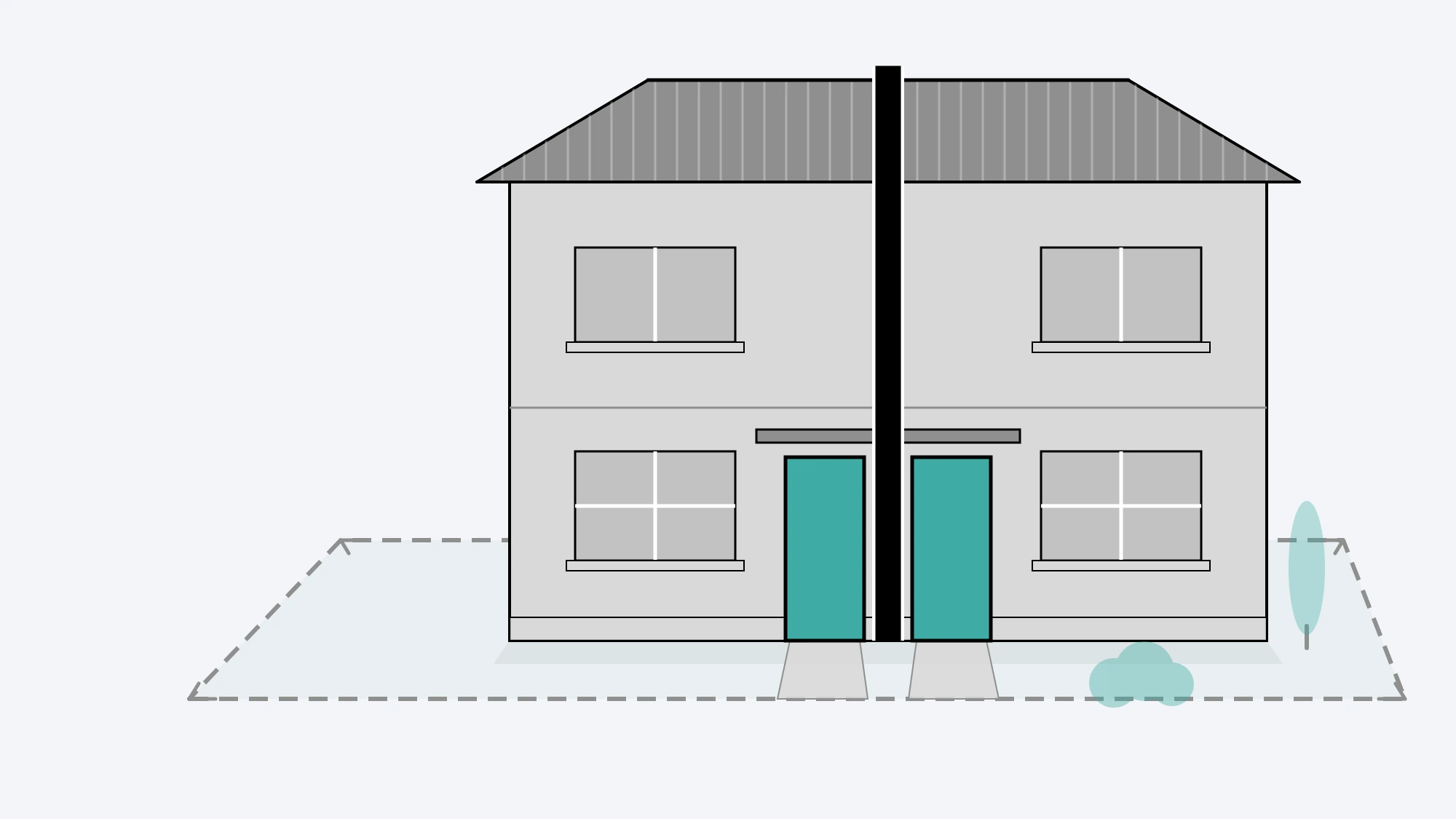
Two attached duplex homes can look identical and carry different title structures. In New South Wales the pair may sit on two separate Torrens lots with the boundary running through the shared wall: the NSW Department of Planning, Housing and Infrastructure (2025) describes semis as “side-by-side dual occupancies that have been subdivided down the middle, so each house sits on its own lot”. Or the pair may be two lots inside a strata scheme — NSW Fair Trading (2025) addresses its strata-living guide to owners of “a strata-titled property such as an apartment, villa, townhouse, duplex or semi-detached house”, so a duplex can be strata-titled on the regulator’s own description.
The shared wall does not tell you which structure you are looking at, and a shared driveway or service does not automatically make a property strata. What shared elements create are ownership and maintenance questions: who owns the wall, who can use the driveway, who pays when work is needed. A strata scheme is one way title law organises those rights and responsibilities.
That is why the building cannot answer the title question. For the duplex in front of you, check the title and, if it is strata, the strata plan. Whether a duplex can be built or split that way on a particular site is a separate planning question, and in New South Wales it lives in the council’s local environmental plan rather than in state title law.
The two-lot scheme, and the detachment test
Two-lot schemes are the duplex case. Fair Trading (2022) limits the group to two lots, and its examples are duplexes and houses split down the middle. As at 2022 it put them at about 30% of all strata schemes in the state.
The exemption test has three limbs. The first is that “the buildings in each lot are physically detached” (NSW Fair Trading, 2022). The others: no further buildings outside the lots, and a unanimous owner resolution. Clear the three limbs and reporting on capital works and combined building insurance ends.
Its example makes it concrete. NSW Fair Trading’s worked example names “Samira and Dhaval”, neighbours in “a two-lot scheme duplex in Canterbury” (2022). There, “the houses in the duplex are fully detached and there are no other buildings or common property in the scheme”. They clear the two physical limbs; the third is theirs to pass. An attached duplex fails at the first.
Even then the scheme does not vanish: two-lot schemes must still “keep clear records and hold meetings”, and hold “an AGM each year” (NSW Fair Trading, 2022).
Torrens title vs strata title across the states and territories
The words change at the border, because title sits inside state law. Don’t assume the New South Wales terminology applies across Australia: the name of the ownership structure, the governing entity and the rules for two-lot properties can all differ.
| Where | The non-strata side | Strata side | The entity | Two-lot / duplex regime |
|---|---|---|---|---|
| NSW | Torrens Title Register (register) | strata scheme | owners corporation | two-lot scheme |
| VIC | Transfer of Land Act (statute) | plan of subdivision | owners corporation | two-lot subdivision |
| QLD | Land Title Act 1994 (statute) | community titles scheme | body corporate | Two-lot Schemes Module |
| SA | Real Property Act 1886 (statute) | community plan or strata plan | strata corporation or community corporation | two-lot by-law exemptions (community title) |
| WA | green title (everyday term) | built strata or survey-strata | strata company | 2 lots minimum |
| TAS | Land Titles Act 1980 (statute) | strata scheme | body corporate | not verified |
| ACT | Crown leasehold, ~99 years (tenure system) | unit title | owners corporation | 2 units minimum |
| NT | Land Title Act 2000 (statute) | unit title scheme | body corporate | 2 units minimum |
One note on the first data column: it names different kinds of things — a register, a statute, an everyday term, a tenure system — matching the level each source actually defines, and the bracketed tags keep those levels from reading as one taxonomy. New South Wales, Victoria and Queensland each name a two-lot regime, and in South Australia a two-lot scheme’s by-laws can carry exemptions; Western Australia, the ACT and the Northern Territory set only a statutory minimum. Three rows earn more than a line.
The ACT runs on leasehold
The ACT Government (undated) states that “leasehold is ACT’s system of land tenure”, and a residential lease “is usually for a term of 99 years”. Its strata equivalent is unit title. The Class B units plan is the duplex-shaped one, covering “townhouses or dual occupancies with no units above” (ACT Government, 2025). The governing body wears a familiar name: “All unit owners are part of a group known as the owners corporation” (2025).
Western Australia has its own vocabulary
Consumer Protection WA (2024) calls ordinary freehold “green title”, “the most common title in WA”. Landgate then splits strata in two. Built strata sets boundaries “by reference to the building or buildings shown on the strata plan”. A survey-strata plan “does not show any buildings and is very similar to a freehold parcel of land” (Landgate fact sheet, undated). So a WA strata lot can behave much like green title. The governing body is the strata company, “automatically established” on registration: it “refers to all the owners of lots within a strata titles scheme” and is “the governing body of the strata titles scheme” (Landgate fact sheet, undated).
“Body corporate” is superseded in Victoria and current in Queensland
Consumer Affairs Victoria (undated) records that an owners corporation was “formerly known as a body corporate”. Queensland still uses the term, for “a legal entity which is created when land is subdivided and registered under the Land Title Act 1994” (Queensland Government, 2023). Tasmania and the NT use it too. South Australia’s words are different again: the title to common property is issued “in the name of the community corporation or strata corporation” (Land Services SA, undated).
Where the two-lot machinery runs lighter
Victoria exempts a two-lot subdivision from several duties, though Consumer Affairs Victoria (2026) still warns owners “are responsible for any common property and risk significant legal and financial liabilities”. Queensland runs decisions through a written agreement “signed by the owners of both lots” (Queensland Government, 2018). The Northern Territory makes the committee optional below four unit owners (Unit Title Schemes Act 2009, s 74).
South Australia runs two regimes — strata plans divide land into units under the Strata Titles Act 1988, community plans divide it into lots under the Community Titles Act 1996 (Land Services SA, undated) — and for community-title schemes its Law Handbook says “the by-laws of schemes with only two lots may exempt the corporation from having annual general meetings or administrative and sinking funds” (Legal Services Commission of South Australia, undated). One honest limit remains: Tasmania’s two-lot position. The state’s June 2025 strata guide describes the body corporate’s duties with no size-based tier we could verify, so that cell stays open.
Is Torrens title better than strata title?
Neither is universally better. What changes is what you own and who decides.
On a separate Torrens lot you generally have more individual control, and you carry the property’s costs and maintenance yourself. In a strata scheme you own your lot, and the common property and its costs are shared with the other lot owners, so some decisions are collective. Which structure suits a particular buyer depends on the property, the scheme’s arrangements, and how much individual control or shared responsibility they want.
Does strata title make it harder to get a mortgage?
Mortgage sites and law-firm blogs say Torrens valuations are cleaner and strata borrowing is capped harder. We could not trace that to a regulator. APRA’s Prudential Standard APS 112 has been in force since 1 July 2025. It sets risk weights “based on their classification as an owner-occupied principal-and-interest or other standard residential property exposure, the application of eligible LMI and the exposure’s LVR” (APS 112, 2025). Title type is not among the factors it names.
Be precise. The regulator draws no Torrens-versus-strata line. That does not mean every lender treats them alike. APRA gives each institution “the flexibility to manage residential mortgage lending in a manner that is best suited to achieving its business objectives” (APG 223, undated). So a tighter cap on strata is that lender’s credit policy, not a rule.
Strata ownership should not be confused with a weaker claim to the lot itself. In Western Australia a lot owner holds “rights as the proprietor of a fee simple estate in the lot”. That wording is Landgate’s, in its Western Australian strata policy guide (STP-04, undated). Landgate says the mechanism protects “the equity of the owner and any mortgagee of the lot” against the older alternatives, “tenancies in common or company shares” (STP-01, undated).
What does the title change about living in a duplex?
It changes which responsibilities are yours alone, which sit with the scheme, and which decisions involve the other owner.
In New South Wales, a two-lot strata scheme does not disappear just because it qualifies for an exemption: it must still keep records and hold an annual general meeting. An attached duplex cannot qualify for the exemption in the first place, because it fails the physical-detachment requirement, so the capital works and combined building insurance requirements continue (NSW Fair Trading, 2022). Those obligations bind both owners for as long as the scheme exists.
Two separate Torrens lots remove the scheme, not the shared wall — and not necessarily every shared responsibility with it. Each owner is generally responsible for their own property, while a shared wall, driveway or service may still need its own legal or maintenance arrangement. The title search above tells you which side of that line a listing sits on, before you commit to the purchase.
Insurance belongs with the wider due-diligence checks rather than with the title alone. Torrens title vs strata title settles something narrower: which set of rules you bought into, and who else gets a say in them.
A knest.ai property report flags what sits around a property: flood and bushfire exposure, zoning, power lines and noise. Your conveyancer confirms what the title itself records.
View a sample reportFrequently asked questions
What are the disadvantages of Torrens title?
On a Torrens lot there is no scheme, so there is no owners corporation looking after shared elements and no scheme disclosure owed to you before contract. A buyer in a New South Wales strata scheme can obtain a section 184 certificate to understand the scheme’s financial health (NSW Fair Trading, 2026). A buyer on an ordinary Torrens lot in New South Wales has no equivalent, and carries repairs and insurance without a scheme behind them.
Can a duplex be converted or subdivided between title types?
Neither is a question the title answers. We could not verify any New South Wales state government guidance on converting a duplex between title types. There, subdivision is governed by the council’s own local environmental plan, so the answer is council by council. Before you rely on a duplex being convertible or subdividable, get it confirmed in writing for that address by your conveyancer and the council.
What is a duplex’s body corporate called in my state?
It depends on the title, and the correct word depends on the state. NSW Fair Trading (2026) names duplexes among strata properties, and two-lot schemes must still keep records and hold an annual general meeting (NSW Fair Trading, 2022). In Victoria the entity is an owners corporation; Consumer Affairs Victoria (undated) records the older label as superseded. In Western Australia it is the strata company, in South Australia the strata corporation or community corporation, and in the ACT the owners corporation. Queensland, Tasmania and the Northern Territory still use body corporate.
Sources
- Office of the Registrar General (NSW), About us, undated, retrieved 2026-08-17, https://www.registrargeneral.nsw.gov.au/about-us
- Office of the Registrar General (NSW), Title Guarantee, undated, retrieved 2026-08-17, https://www.registrargeneral.nsw.gov.au/title-guarantee
- NSW Government (Fair Trading), Buying a strata property, 1 April 2026, retrieved 2026-08-17, https://www.nsw.gov.au/housing-and-construction/strata/buying-a-strata-property
- NSW Government (Fair Trading), Strata search, 2 October 2025, retrieved 2026-08-17, https://www.nsw.gov.au/housing-and-construction/strata/strata-search
- NSW Fair Trading, Strata living - a guide to the essentials for strata owners, 28 October 2025, retrieved 2026-08-17, https://www.nsw.gov.au/housing-and-construction/strata/strata-living-guide
- NSW Department of Planning, Housing and Infrastructure, Frequently asked questions, Low and Mid-Rise Housing Policy, 17 December 2025, retrieved 2026-08-28, https://www.planning.nsw.gov.au/policy-and-legislation/housing/low-and-mid-rise-housing-policy/frequently-asked-questions
- NSW Fair Trading, How two-lot strata schemes can easily tackle reporting, 22 August 2022, retrieved 2026-08-17, https://www.nsw.gov.au/departments-and-agencies/fair-trading/news/two-lot-strata-schemes
- Consumer Affairs Victoria, Property definitions, undated, retrieved 2026-08-17, https://www.consumer.vic.gov.au/housing/buying-and-selling-property/definitions
- Consumer Affairs Victoria, Two-lot subdivisions, 22 April 2026, retrieved 2026-08-17, https://www.consumer.vic.gov.au/housing/owners-corporations/buying-into-an-owners-corporation/two-lot-subdivisions
- Queensland Government, Role of the body corporate, 13 January 2023, retrieved 2026-08-17, https://www.qld.gov.au/law/housing-and-neighbours/body-corporate/roles/body-corporate
- Consumer Affairs Victoria, Buying an apartment or unit - checklist, 9 May 2021, retrieved 2026-08-17, https://www.consumer.vic.gov.au/housing/buying-and-selling-property/checklists/buying-an-apartment-or-unit
- Queensland Government, Buying a body corporate property, 18 May 2026, retrieved 2026-08-17, https://www.qld.gov.au/law/housing-and-neighbours/body-corporate/legislation-and-bccm/buying-into
- Queensland Government, Two-lot Schemes Module, 7 February 2018, retrieved 2026-08-17, https://www.qld.gov.au/law/housing-and-neighbours/body-corporate/legislation-and-bccm/modules/two-lot
- Land Services SA, Glossary of Property Terms, undated, retrieved 2026-08-17, https://www.landservices.com.au/glossary-of-property-terms/
- Land Services SA, Get a copy of your Title, undated, retrieved 2026-08-17, https://www.landservices.com.au/land-registration/get-a-copy-of-your-certificate-of-title/
- Legal Services Commission of South Australia, Law Handbook: Strata and Community Titles — Common questions and answers, undated, retrieved 2026-08-28, https://www.lawhandbook.sa.gov.au/ch23s07s02s20.php
- Titles Queensland, Searches, undated, retrieved 2026-08-17, https://www.titlesqld.com.au/title-searches/
- Department of Natural Resources and Environment Tasmania, How to Search the Land Titles Register, 16 June 2023, retrieved 2026-08-17, https://nre.tas.gov.au/land-tasmania/land-titles-office/general-information/how-to-search-for-land-information/how-to-search-a-torrens-title
- Department of Natural Resources and Environment Tasmania, How to Search for Land Information, 12 October 2021, retrieved 2026-08-17, https://nre.tas.gov.au/land-tasmania/land-titles-office/general-information/how-to-search-for-land-information
- Consumer Protection, Government of Western Australia, Property types, 20 November 2024, retrieved 2026-08-17, https://www.consumerprotection.wa.gov.au/property-types
- Landgate, How strata works in WA - Understanding the basics, undated, retrieved 2026-08-17, https://www.landgate.wa.gov.au/siteassets/documents/strata-and-community-titles/strata-titles/learn-about-strata/understanding-the-basics-of-strata---fact-sheet.pdf
- Department of Natural Resources and Environment Tasmania, The Register, 7 January 2026, retrieved 2026-08-17, https://nre.tas.gov.au/land-tasmania/land-titles-office/general-information/the-register
- Department of Natural Resources and Environment Tasmania, What you should know about Strata Schemes: Strata Living in Tasmania, 24 June 2025, retrieved 2026-08-28, https://nre.tas.gov.au/Documents/strata.pdf
- ACT Government (City and Environment Directorate), Crown leases, undated, retrieved 2026-08-17, https://www.planning.act.gov.au/community/buy/leasing-and-titles/crown-leases
- ACT Government, Owning a unit, 1 July 2025, retrieved 2026-08-17, https://www.act.gov.au/housing-planning-and-property/buy-own/owning-a-unit
- Northern Territory of Australia, Unit Title Schemes Act 2009, as in force at 27 November 2023, retrieved 2026-08-17, https://legislation.nt.gov.au/api/sitecore/Act/PDF?id=12243
- Australian Prudential Regulation Authority, Prudential Standard APS 112 Capital Adequacy: Standardised Approach to Credit Risk, in force 1 July 2025, retrieved 2026-08-17, https://www.legislation.gov.au/F2025L00652/latest/text
- Australian Prudential Regulation Authority, Prudential Practice Guide APG 223 Residential Mortgage Lending, undated, retrieved 2026-08-17, https://www.apra.gov.au/practice-guides/apg-223
- Landgate, STP-04 Strata Title, undated, retrieved 2026-08-17, https://www.landgate.wa.gov.au/land-and-property/land-transactions-hub/land-transaction-policy-and-procedure-guides/strata-titles/overview-of-strata-schemes/stp-04-strata-title/
- Landgate, STP-01 Strata Titles Schemes, undated, retrieved 2026-08-17, https://www.landgate.wa.gov.au/land-and-property/land-transactions-hub/land-transaction-policy-and-procedure-guides/strata-titles/overview-of-strata-schemes/stp-01-strata-titles-schemes/
Daniel Ryan, Editor, Buyer Guides & Property, knest.ai
General information only. This article is general information for Australian home buyers. It isn’t personal legal, financial, credit or tax advice, and it isn’t a property valuation. Title, strata and planning rules differ by state and change over time. Check your own situation with a licensed conveyancer or solicitor in the relevant state. knest.ai is an AI property-intelligence platform that supports buyer judgment. It isn’t a conveyancer, a solicitor or a legal service, and it doesn’t replace one.