
Moore Park NSW 2021
Moore Park, NSW 2021 is a small inner-Sydney suburb in the City & Eastern Suburbs region, governed by the City of Sydney. Covering about 1.86 sq km, it is best known as an urban built-up sports and events precinct with strong access to the CBD, around 15 minutes by public transport and 10 minutes by car. Light rail serves Moore Park via the L2/L3 lines, buses are plentiful, and Metro access is nearby at Central. The suburb has strong cultural appeal, moderate walkability, limited retail, generally above-average household income, and a mature resident profile.
The mix of houses and apartments that make up the Moore Park NSW 2021 property market, and the sale price range each achieved over the past 12 months.
How close Moore Park NSW 2021 properties sit to major roads or rail, and how much traffic noise that brings compared to properties set back from them.
Train, metro, light rail, ferry and B-Line services accessible from Moore Park NSW 2021.
"Houses" in this report includes detached houses, duplexes, and terraces.
How house lots across Moore Park NSW 2021 sit relative to street level — topography that affects drainage, flood risk, privacy, and build cost.
See which key planning overlays and environmental risks affect this suburb before you buy.
The share of Moore Park NSW 2021 houses within easy walking distance (1.2km) of a train station.
Typical land characteristics and common property features across Moore Park NSW 2021.
How property prices vary across the different pockets of Moore Park NSW 2021, and how each pocket compares.
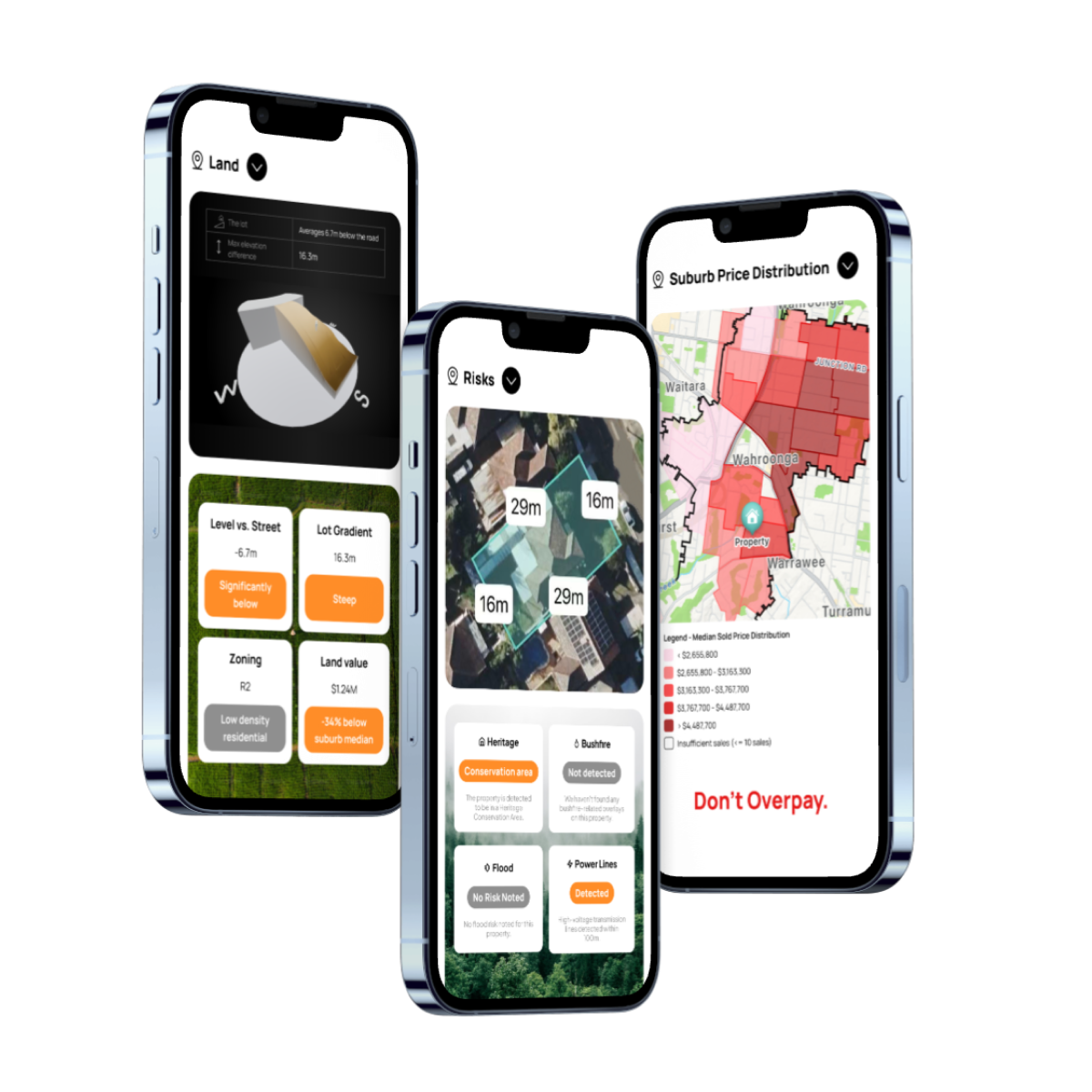


Where apartment projects are concentrated across Moore Park NSW 2021, with project-level sales context.
The median weekly rent for apartments in Moore Park NSW 2021.
The largest apartment projects in Moore Park NSW 2021, ranked by number of lots.
Median age, household income, and the renter-versus-owner split that shape the Moore Park NSW 2021 community.
Get the knest.ai app
Gain ultimate insights into any property
Buyer-focused property platform identifying risks, price estimates, 3D land maps and more to help you make smarter decisions — completely free.

Living in Moore Park NSW 2021: Suburb Profile & FAQs
Common questions about living in and buying property in Moore Park NSW 2021 — lifestyle, transport, schools, and the housing market.
Note: Data is sourced from the Australian Bureau of Statistics (ABS) 2021 Census data and knest.ai internal statistical data.
Is Moore Park NSW 2021 a good suburb for families?
Moore Park NSW 2021 is a weaker to mixed option for families overall, rather than a classic family-friendly suburb. The main reason is that the housing profile is not especially geared to family buyers looking for traditional long-term family homes, with very little separate-house stock shown and a high-density feel overall. The local safety rating is 1 out of 5, which means buyers focused heavily on schools and safety should look carefully rather than assume it is automatically good for kids. There is also not much evidence of a large child population, with 0% in the 0 to 4 age group and about 10.7% in the 5 to 14 group, while the average household size is just 1. That said, some buyers may still consider Moore Park if they prioritise inner-city access, nearby amenities and a more urban lifestyle over a traditional suburban family setting. It can work better for households wanting convenience and access to the eastern side of Sydney, but it is not the strongest suburb choice for buyers seeking a calm, house-based family environment.
What is it like to live in Moore Park NSW 2021?
Living in Moore Park NSW 2021 feels urban, event-oriented and highly city-fringe rather than quiet or village-like. The suburb character is best described as a sports and events precinct, and that shapes daily life in a very real way. You are in the City & Eastern Suburbs region, with an urban built-up setting, modest canopy cover of 23.18%, a walkability rating of 3 out of 5, retail at 1 out of 5 and culture at 4 out of 5. In practical terms, Moore Park offers a distinctive lifestyle for buyers who like being close to major venues, city access and a more energetic eastern suburbs setting. The trade-off is that Moore Park is not especially leafy, not particularly retail-rich within the suburb itself, and it does not read as a quiet residential pocket. Buyers wanting a calmer daily rhythm or stronger neighbourhood shopping convenience may find the lifestyle a bit too specialised, while those who enjoy an active, inner-urban base may see that as exactly the appeal.
Is Moore Park NSW 2021 well connected for commuting?
Moore Park NSW 2021 is well connected for commuting, especially for buyers who value quick access to the Sydney CBD. Public transport to the CBD averages about 15 minutes, while driving averages about 10 minutes, which is a strong result for a city-fringe suburb. Moore Park does not currently have its own train station, but it does have many bus services, nearby metro access via M1 at Central, and direct light rail service on the L2 and L3 through Moore Park itself. For many commuters, that creates a practical and flexible transport picture. The trade-off is that the transport mix is stronger on light rail, buses and nearby connections than on direct train access within the suburb. Some buyers strongly prefer being able to walk to a heavy rail station, and Moore Park may feel less seamless for them than a suburb with all modes in place. Still, for CBD workers and regular city commuters, Moore Park remains a very convenient base.
Who does Moore Park NSW 2021 suit best?
Moore Park NSW 2021 suits best buyers who want an inner-city fringe base and are comfortable with a more urban, compact and mixed residential setting. The suburb appears to skew away from traditional family-house ownership, with very little separate-house presence, a high renter share of about 77.8%, and a median age of 43. The resident profile is mixed rather than dominated by one clear affluent professional cohort, although around 25% are managers and professionals. Occupational data also points to a diverse local base rather than a single prestige-led buyer type. In buyer terms, Moore Park is more likely to appeal to professionals, downsizers, or lifestyle-driven purchasers who care more about access and location than land size. It may also suit buyers who spend a lot of time in the CBD or eastern side of Sydney and want that convenience. It is likely to suit large family buyers less well, especially those wanting a detached house, a quieter residential feel, or a more classic family-friendly suburb profile.
What are the pros and cons of living in Moore Park NSW 2021?
The main trade-off in Moore Park NSW 2021 is that you get excellent city-fringe connectivity and a distinctive urban lifestyle, but you give up some of the comfort factors buyers often want in a more settled residential suburb. On the plus side, Moore Park has strong commuting convenience, with light rail in the suburb, many bus services, nearby metro access and fast travel times to the CBD. It also has a culture rating of 4 out of 5, which fits its role as a sports and events precinct with a lively broader setting. The compromise is that daily life here is less about quiet neighbourhood charm and more about practicality and location. Safety is rated 1 out of 5, retail is only 1 out of 5, walkability is moderate at 3 out of 5, and the suburb is clearly urban rather than leafy. Buyers wanting peace, strong family amenity or a traditional suburban feel may care most about those downsides. For the right buyer, though, Moore Park can still be a smart fit because of its access and city-edge position.
What are property prices like in Moore Park NSW 2021?
Property prices in Moore Park NSW 2021 are hard to read from recent sales because there were no suburb-level sold-property results returned in the latest six-month history search. In practical terms, that usually means buyers should treat Moore Park as a tightly transacted or less conventional market pocket rather than expecting a large volume of clear comparable sales. For anyone researching property prices in Moore Park, that makes it especially important to judge value carefully against nearby suburbs, stock type and exact location rather than relying on broad suburb medians alone. The likely buyer takeaway is that purchasing in Moore Park may involve more interpretation and less straightforward price benchmarking than in larger, more active suburbs. That can be manageable for experienced buyers who understand inner-city stock and are comfortable comparing limited evidence. The trade-off is that first-time buyers or anyone wanting lots of recent suburb-wide sales data may find pricing transparency thinner here than in more frequently traded Sydney suburbs.
20 surrounding suburbs near Moore Park NSW 2021
8 streets in Moore Park NSW 2021