
Bellevue Hill NSW 2023
Bellevue Hill, NSW 2023 is an affluent residential suburb in Sydney’s City & Eastern Suburbs, governed by Woollahra Municipal Council. It has a strong harbour and waterfront setting, substantial tree canopy cover, many bus services, and average public transport and driving commutes to the CBD of about 30 and 15 minutes. Housing is a mix of houses and apartments, with apartments more common overall. The suburb is known for an upscale, established character, strong primary and secondary school ratings, solid safety, and above-average household income. Major regional shopping is nearby at Westfield Bondi Junction.
The mix of houses and apartments that make up the Bellevue Hill NSW 2023 property market, and the sale price range each achieved over the past 12 months.
How close Bellevue Hill NSW 2023 properties sit to major roads or rail, and how much traffic noise that brings compared to properties set back from them.
Train, metro, light rail, ferry and B-Line services accessible from Bellevue Hill NSW 2023.
"Houses" in this report includes detached houses, duplexes, and terraces.
How house lots across Bellevue Hill NSW 2023 sit relative to street level — topography that affects drainage, flood risk, privacy, and build cost.
See which key planning overlays and environmental risks affect this suburb before you buy.
The share of Bellevue Hill NSW 2023 houses within easy walking distance (1.2km) of a train station.
The 20-year trend in median house sale prices across Bellevue Hill NSW 2023, tracked separately from apartments.
Typical land characteristics and common property features across Bellevue Hill NSW 2023.
How property prices vary across the different pockets of Bellevue Hill NSW 2023, and how each pocket compares.
The top 3 highest house sales in Bellevue Hill NSW 2023 over the past 24 months.


158 popular houses in Bellevue Hill NSW 2023
The 20-year trend in median apartment sale prices across Bellevue Hill NSW 2023, tracked separately from houses.
Where apartment projects are concentrated across Bellevue Hill NSW 2023, with project-level sales context.
The median weekly rent for apartments in Bellevue Hill NSW 2023.
The largest apartment projects in Bellevue Hill NSW 2023, ranked by number of lots.
324 popular apartments in Bellevue Hill NSW 2023
Median age, household income, and the renter-versus-owner split that shape the Bellevue Hill NSW 2023 community.
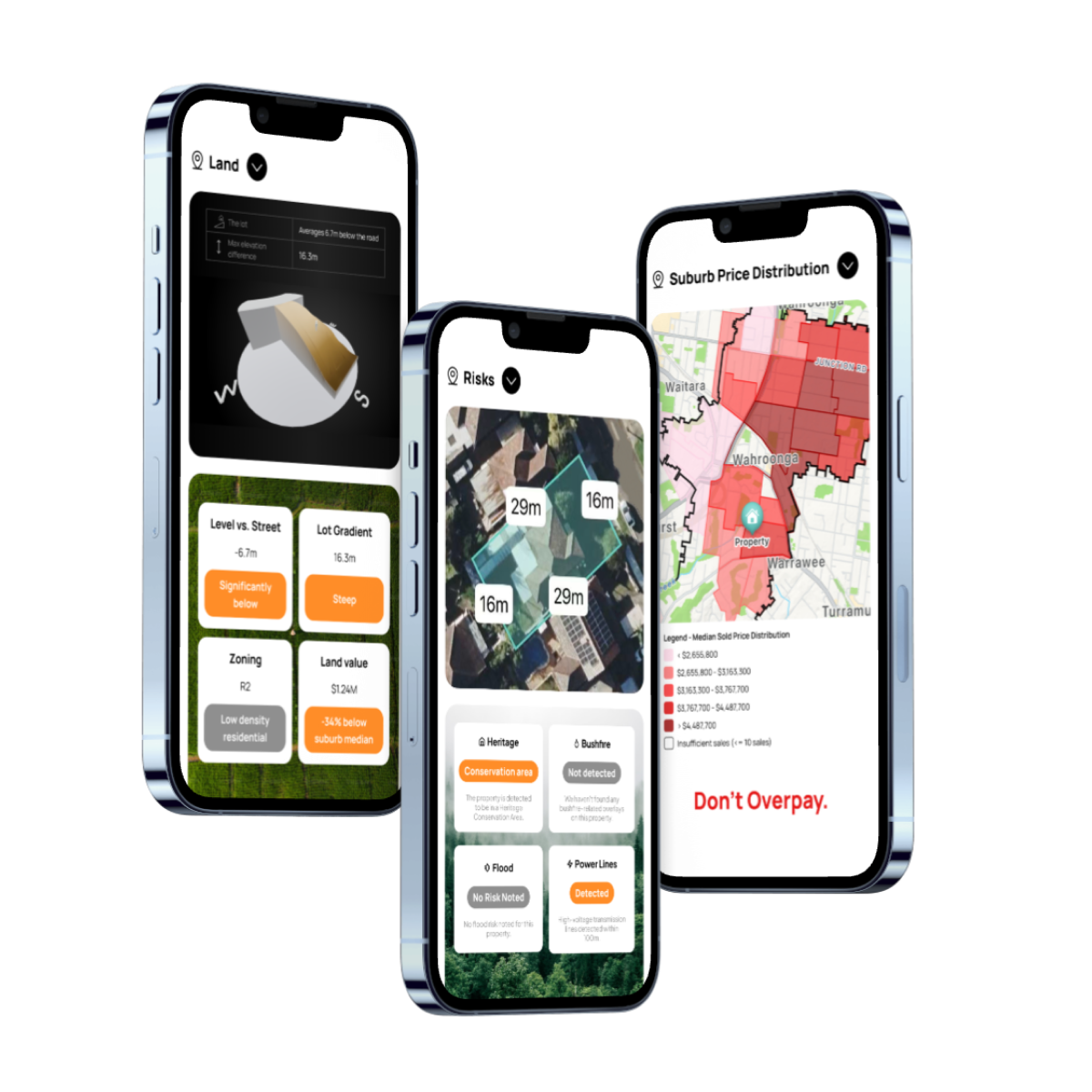
Get the knest.ai app
Gain ultimate insights into any property
Buyer-focused property platform identifying risks, price estimates, 3D land maps and more to help you make smarter decisions — completely free.

Living in Bellevue Hill NSW 2023: Suburb Profile & FAQs
Common questions about living in and buying property in Bellevue Hill NSW 2023 — lifestyle, transport, schools, and the housing market.
Note: Data is sourced from the Australian Bureau of Statistics (ABS) 2021 Census data and knest.ai internal statistical data.
Is Bellevue Hill NSW 2023 a good suburb for families?
Bellevue Hill NSW 2023 is a strong suburb for families, especially for buyers who place a high value on schooling and a more established residential setting. The school profile is a major strength here, with both primary and secondary education rated 10 out of 10, and safety also sits at a solid 4 out of 5. That combination will matter to buyers searching for a family-friendly suburb with strong schools and a reassuring day-to-day feel. The age mix supports that picture too, with children aged 0 to 4 making up 5.4% of residents and those aged 5 to 14 at 12.9%, so Bellevue Hill is not just aspirational on paper but clearly lived in by families. The trade-off is housing mix and cost. Only 25% of homes are separate houses, while 46% are apartments, so larger family homes are more limited and usually expensive. For buyers who can stretch financially, Bellevue Hill is very good for kids, but it is not a low-cost family option.
What is it like to live in Bellevue Hill NSW 2023?
Living in Bellevue Hill NSW 2023 feels affluent, established and primarily residential, with a polished Eastern Suburbs lifestyle rather than a hectic urban one. The suburb character comes through as clearly prestige-led, and its harbour-side setting adds to that sense of exclusivity. Walkability is a healthy 4 out of 5, which means many daily errands and local outings are manageable without constant driving, but retail is only 2 out of 5, so Bellevue Hill is not the kind of suburb where everything happens right on your doorstep. Culture sits at 3 out of 5, which suggests a pleasant but not especially buzzy local atmosphere. With canopy cover at 31.9% and a safety rating of 4 out of 5, the lifestyle feels comfortable and visually appealing. The trade-off is that Bellevue Hill lifestyle is more about residential calm and status than convenience-packed village energy, so buyers wanting a busier café and shopping scene may want something closer to a stronger local centre.
Is Bellevue Hill NSW 2023 well connected for commuting?
Bellevue Hill NSW 2023 is reasonably well connected for commuting, though the transport picture is a little mixed rather than exceptional. Public transport access is helped by many bus services, and the suburb is near a T4 train connection via Edgecliff, which gives buyers a practical route into the city. Average public transport travel time to the Sydney CBD is about 30 minutes, while driving is around 15 minutes in typical conditions, so Bellevue Hill works well for many city-based professionals. Walkability at 4 out of 5 also supports shorter local trips once you are in the suburb. The limitation is that Bellevue Hill does not have its own train, metro, light rail or ferry service, so commuters are still relying on buses and nearby stations rather than direct rail access from within the suburb itself. For buyers who mainly drive or are comfortable using buses to reach rail, that is manageable, but daily rail-first commuters may find other suburbs more straightforward.
Who does Bellevue Hill NSW 2023 suit best?
Bellevue Hill NSW 2023 suits affluent professionals, executive households and family buyers who want an established Eastern Suburbs address with strong schooling credentials. The resident profile is quite telling: 63.2% of locals are managers or professionals, the top occupations are professionals at 40.8% and managers at 22.3%, and median weekly family income is $3,619. That points to a high-income, career-established buyer base rather than an entry-level market. Housing is mixed, with 46% apartments and 25% separate houses, so Bellevue Hill can appeal both to apartment buyers wanting a premium postcode and to house buyers chasing prestige and long-term family living. About 33.4% of homes are rented, which gives the suburb a somewhat more active housing mix than tightly held family enclaves dominated by owners alone. It may suit first-home buyers less well, especially those needing space on a moderate budget, because the suburb’s pricing and prestige can create a high barrier to entry.
What are the pros and cons of living in Bellevue Hill NSW 2023?
The main trade-off in Bellevue Hill NSW 2023 is that buyers get prestige, strong schools and a quality residential setting, but they give up some everyday convenience and pay heavily for the privilege. What Bellevue Hill does well is clear: safety is 4 out of 5, walkability is 4 out of 5, canopy cover is 31.9%, and the suburb has a refined harbour-side character that appeals to buyers wanting an established Eastern Suburbs lifestyle. The commuting side is also workable, with many buses and nearby train access. On the other hand, retail is only 2 out of 5, so it is less of a walk-to-everything suburb than some buyers expect. The housing mix also leans heavily toward apartments, and premium house stock is relatively limited. That matters most to buyers who want large family homes, strong local shopping strips or direct rail access from within the suburb. For the right buyer, though, those compromises may be entirely worth it.
What are property prices like in Bellevue Hill NSW 2023?
Property prices in Bellevue Hill NSW 2023 are expensive to premium by Sydney standards, especially for houses. In the most recent six months of sales, houses had a median price of about $8.09 million, with the upper end reaching $17.2 million, which firmly places Bellevue Hill in prestige territory. Apartments sit lower but are still expensive, with a median price of $1.32 million across 23 sales. In practical terms, buying property in Bellevue Hill usually means significant budget pressure, even for well-resourced buyers. Houses are clearly the prestige play here, while apartments can provide a more accessible way into the suburb for buyers who value the postcode, lifestyle and school catchment positioning without needing full land ownership. The trade-off is straightforward: buyers are paying a premium for location, status and amenity rather than chasing broad affordability. For purchasers who prioritise value above all else, Bellevue Hill will feel costly, but for prestige-led buyers the pricing is consistent with its market position.
21 surrounding suburbs near Bellevue Hill NSW 2023
60 streets in Bellevue Hill NSW 2023