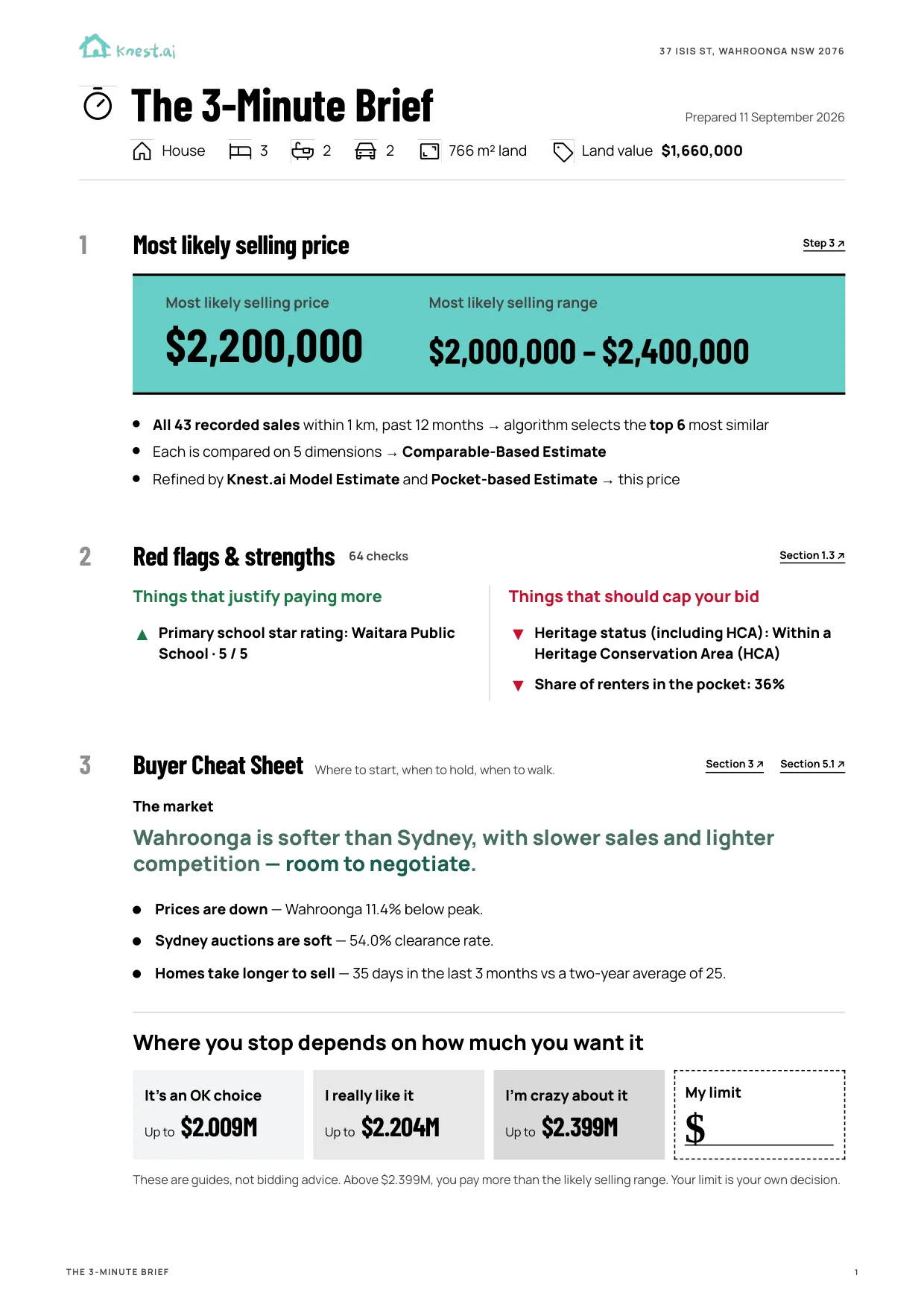
Two doors up sold for $2.5m. The evidence said $2,200,000.
The price guide anchors on the loudest sale. The report starts from all 43 recorded sales within 1 km and shows how it gets to one number.
Where the evidence sits, and where the guide is leaning
Bid to the loud sale and you are $300,000 above the most likely price, and $100,000 above the top of the range. The guide leans on that sale. Your number shouldn’t.
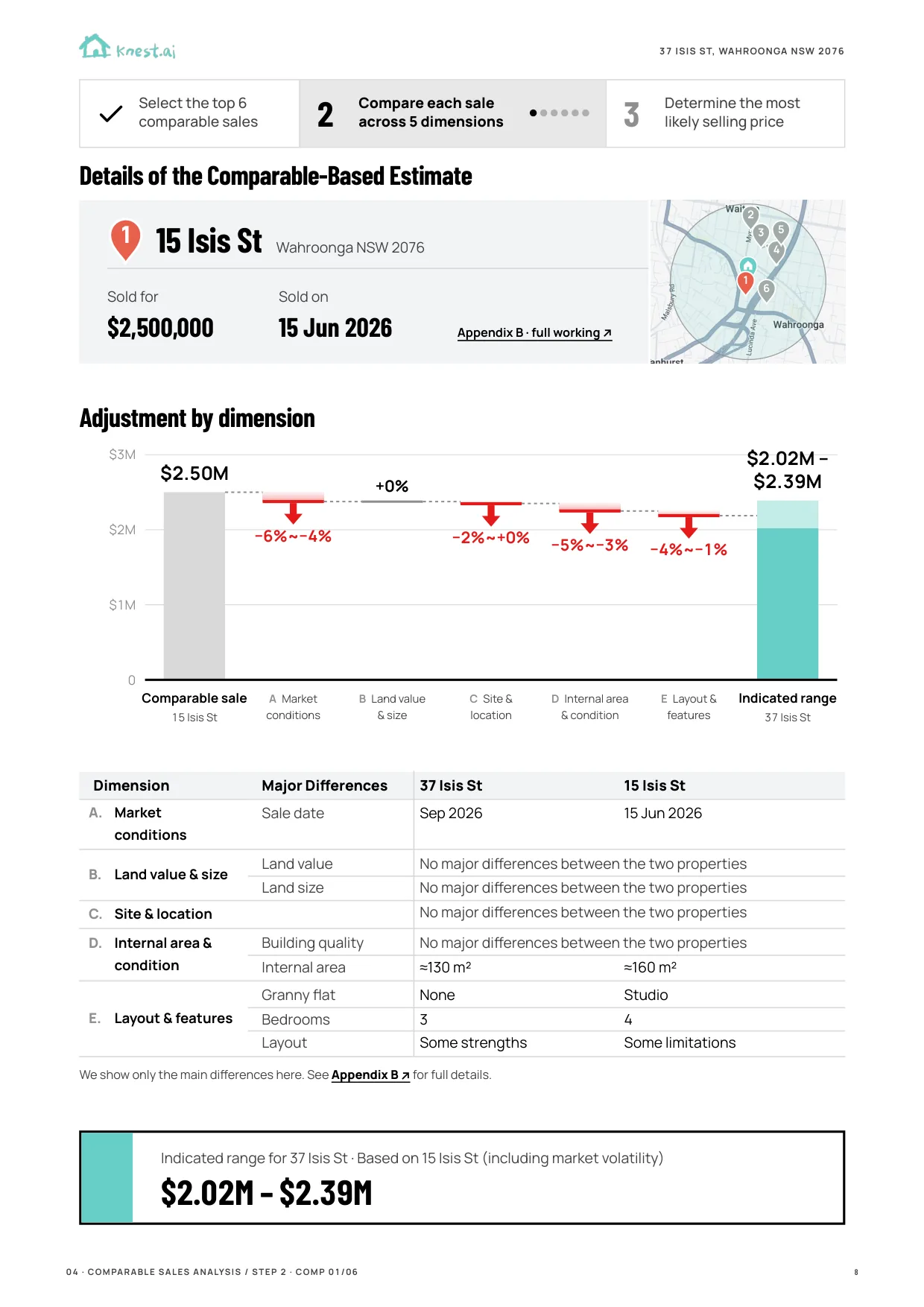
How $2.5m became $2.02m to $2.39m.
15 Isis Street sold in June, 188 metres away. Take out the extra bedroom, the studio and a softer market and it points to $2.02m to $2.39m for this house. Each adjustment is charted, with the reason written next to it.
Why 43 sales became 6.
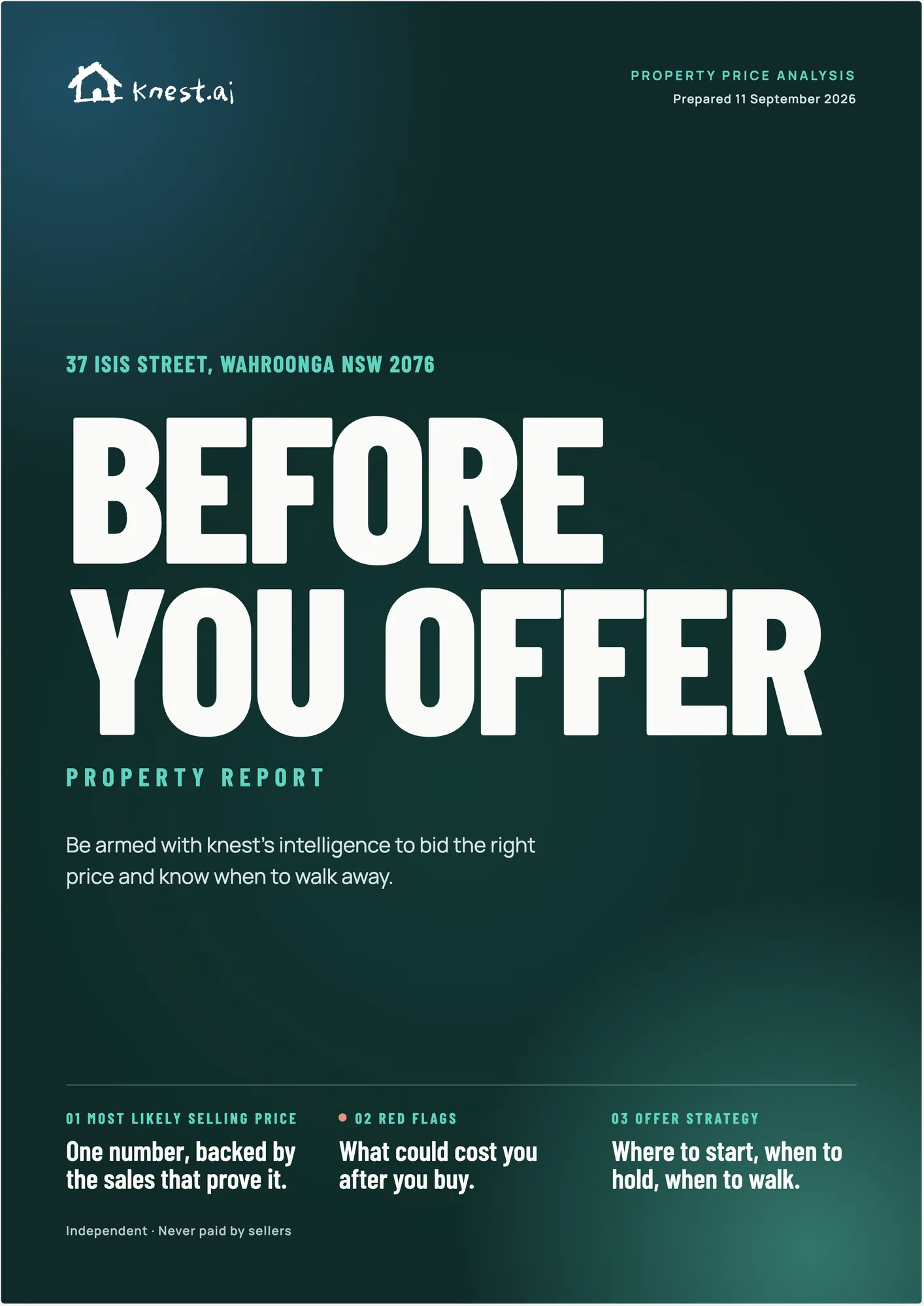
Every sale within 1 km over 12 months is scored for similarity. The six most similar are shown in full, and the ones left out are listed with the reason. The six combine into one range, $2.05m to $2.45m, then it is checked against the knest.ai model estimate and the pocket estimate.
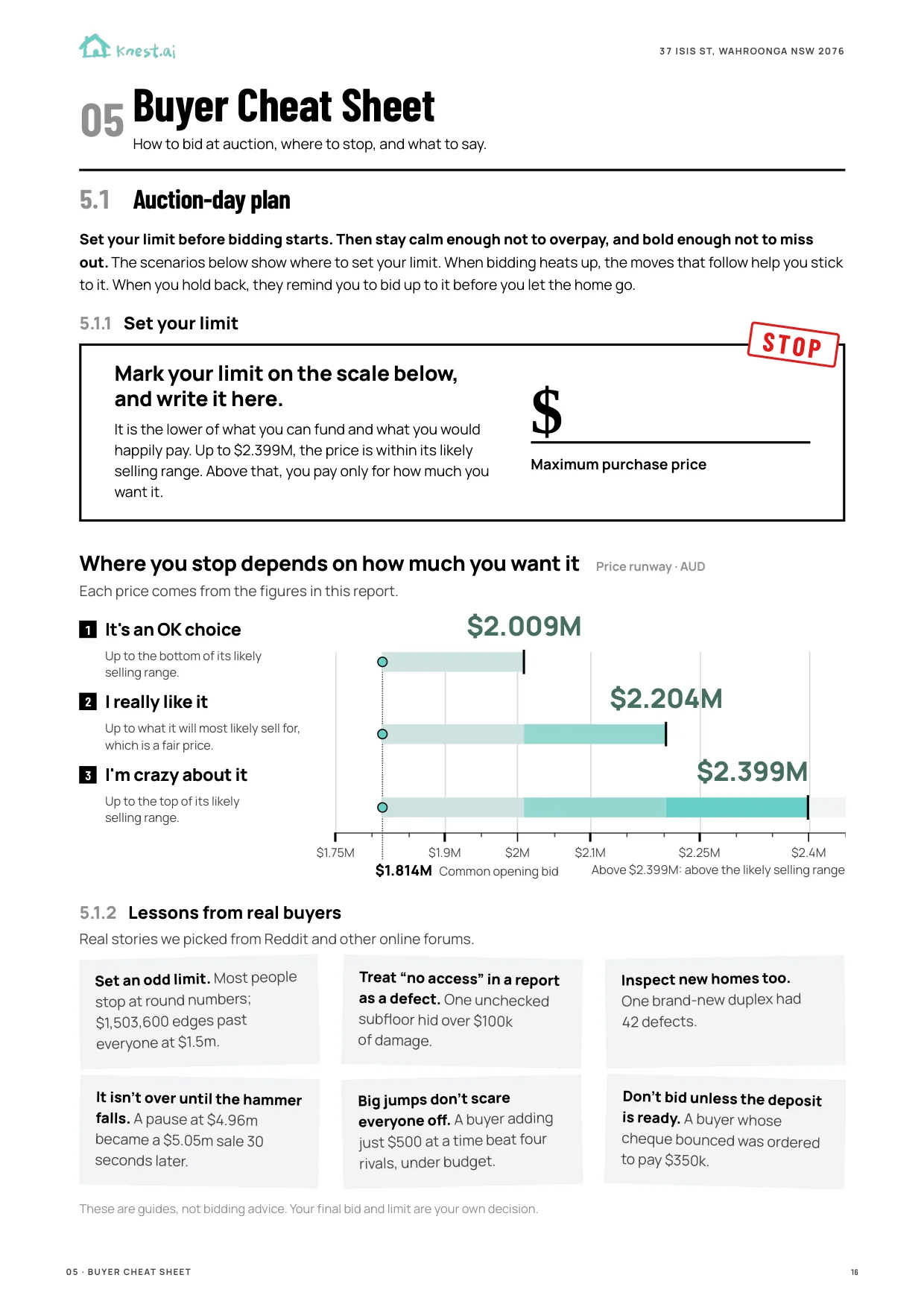
What the cheat sheet puts on the table.
What justifies paying more: Waitara Public, 5 out of 5; the station 790 m away. What should cap the bid: a heritage conservation area, and 36% of the pocket renting. Then three stopping points, $2.009m, $2.204m and $2.399m, and a blank for your limit. It stays your own.
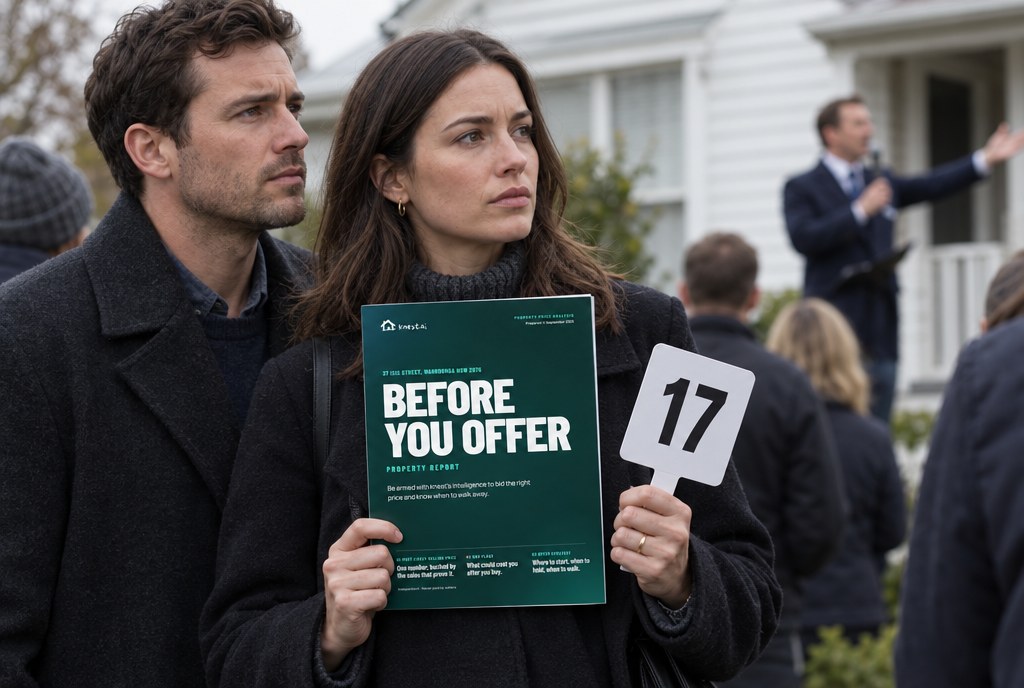
An estimate with the working shown, not a valuation. The number you say is the number you pay.
37 Isis Street, Wahroonga. Every figure from the sample report, prepared 11 September 2026.