After the first inspection · a pre-purchase property report · about 38 pages

Know the house, not just the listing.

Even careful buyers miss things. The Red Flags Report runs 100 data checks on one Sydney house, sorts what it finds into red flags, minor concerns, minor strengths and major strengths, and walks you through the essential checks beyond our data. It won’t catch everything. It is the cross-check that lets you weigh the house with a clear head before you go any further.

$99per address · AUD, incl. GST

Built from government, open and licensed data on the land, the rules and the street, for houses, duplexes and terraces within about 50 km of the Sydney CBD. Read it with your building inspection and your solicitor’s checks; it isn’t a valuation or advice.

See what’s inside

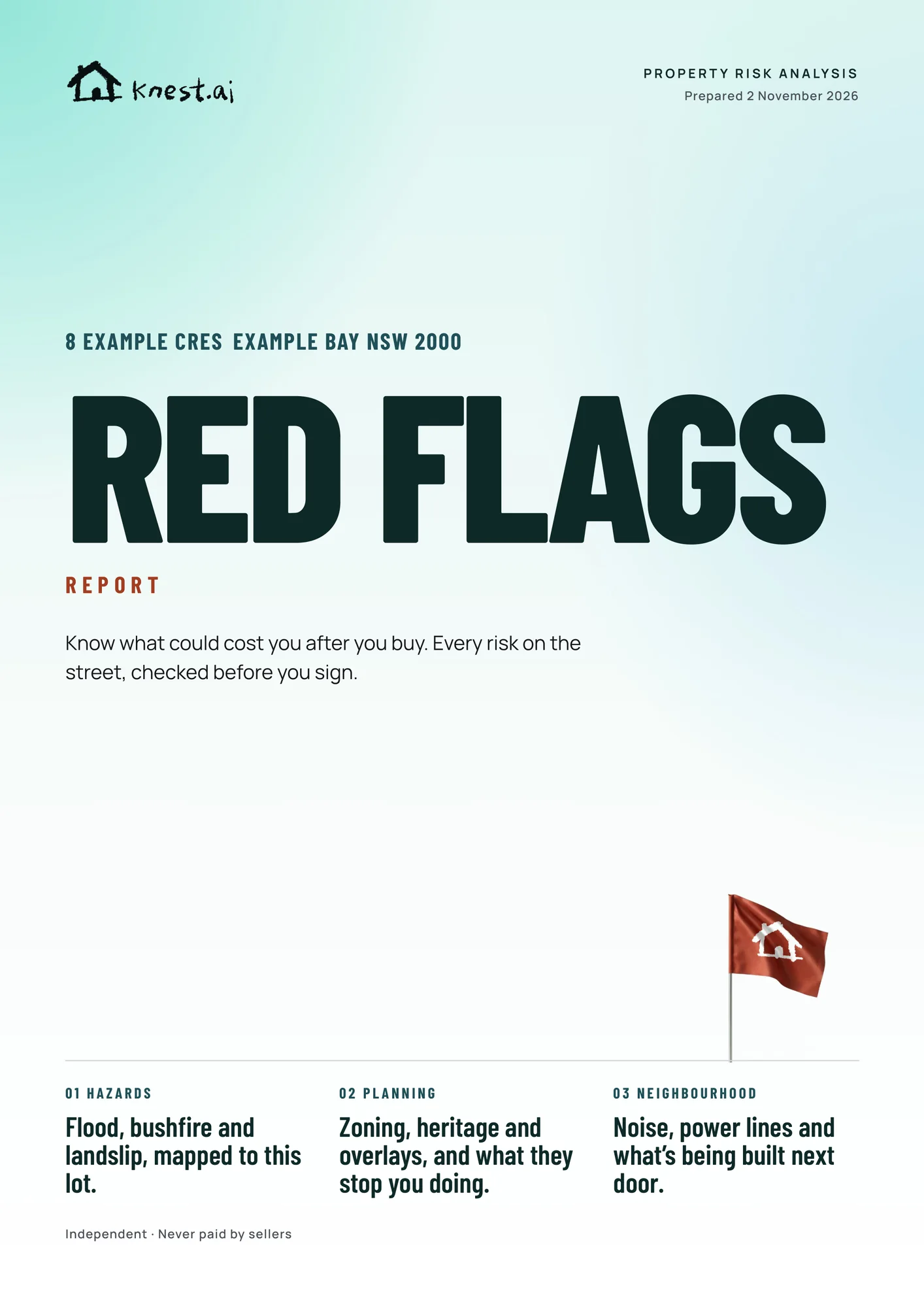
Red Flags Report cover: a five-bedroom house on a steep block (the address is withheld in the sample)
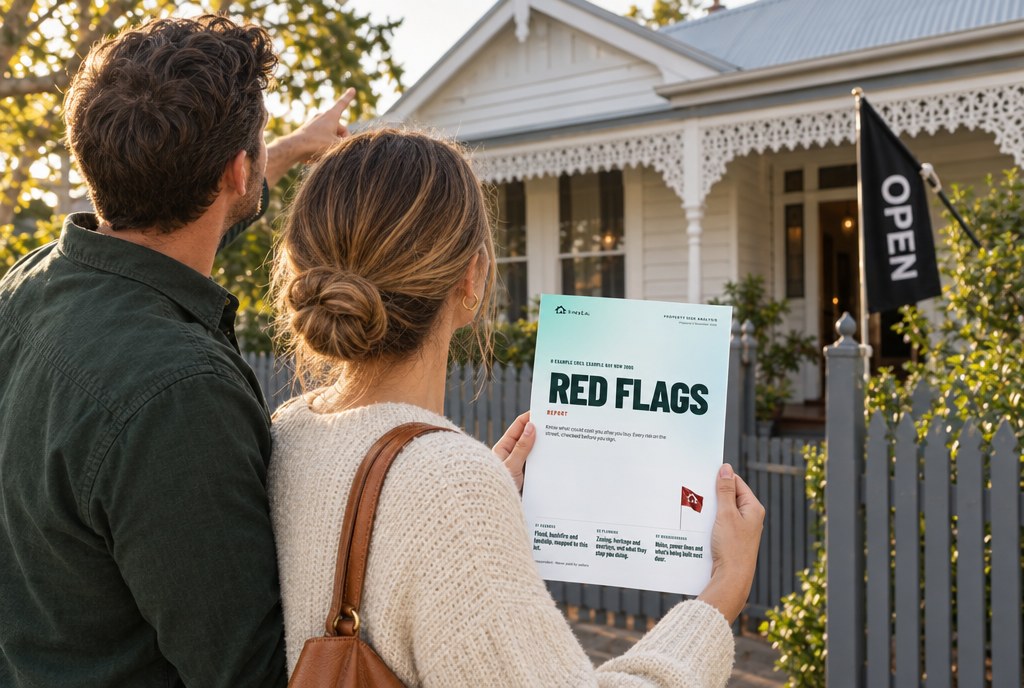
A couple outside a Sydney weatherboard house after an inspection, one holding a printed Red Flags ReportWho it’s for

For the buyer who has seen it once and wants to know what they missed.

  • You’ve inspected once and liked it

    Before the second visit and before the building report: the land, the rules and the street, the things the hallway couldn’t show you, on paper by tomorrow.

  • You’re weighing two or three houses

    The same checks on each, rated the same way, so you compare the frontage, the slope, the overlays and the pocket, not the styling.

  • You’re about to pay for inspections

    Know which matters to hand the inspector, the engineer and the solicitor, with the typical cost of each type, before you spend $495 to $730 on a house you then walk away from.

What you get for $99

A 38-page report on one address.

Red Flags Report cover
  1. The 3-minute briefThe rating tally of 100 checks, the red flags and the major strengths, on one page.p. 3
  2. Property overviewResults by category, the expert takes on land, price and location, the facts.p. 4
  3. Red flagsEach one with the measurement, what it means in daily life and for value, and what to check before you offer.p. 6
  4. Major strengthsWhat the house has going for it, with the same detail.p. 18
  5. Minor concerns and minor strengthsThe smaller items, by category.p. 23
  6. Verification checklistWhat to verify, how, who to ask, and the typical financial impact of that type of matter.p. 28
  7. Item table and terminologyEvery assessment item with its rating, and the terms explained.p. 31
Inside the report · real pages

Three of the 38 pages

From the sample report on a five-bedroom house on a steep block (the address is withheld in the sample).

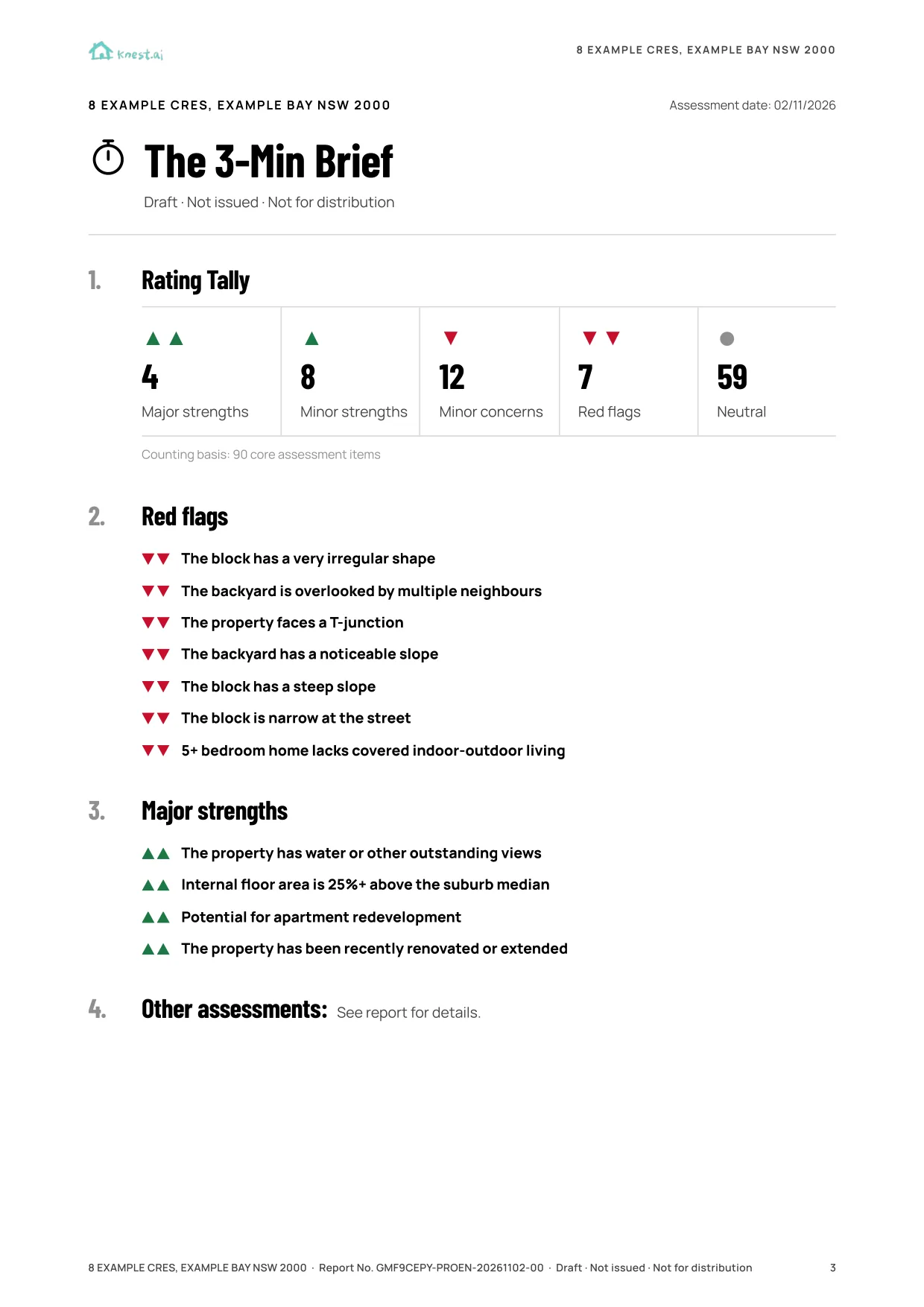
  1. The 3-minute brief page: the rating tally of 90 core items, the red flags and the major strengths

    The brief. The whole house on one page: 4 major strengths, 8 minor, 59 neutral, 12 minor concerns, 7 red flags, by category.

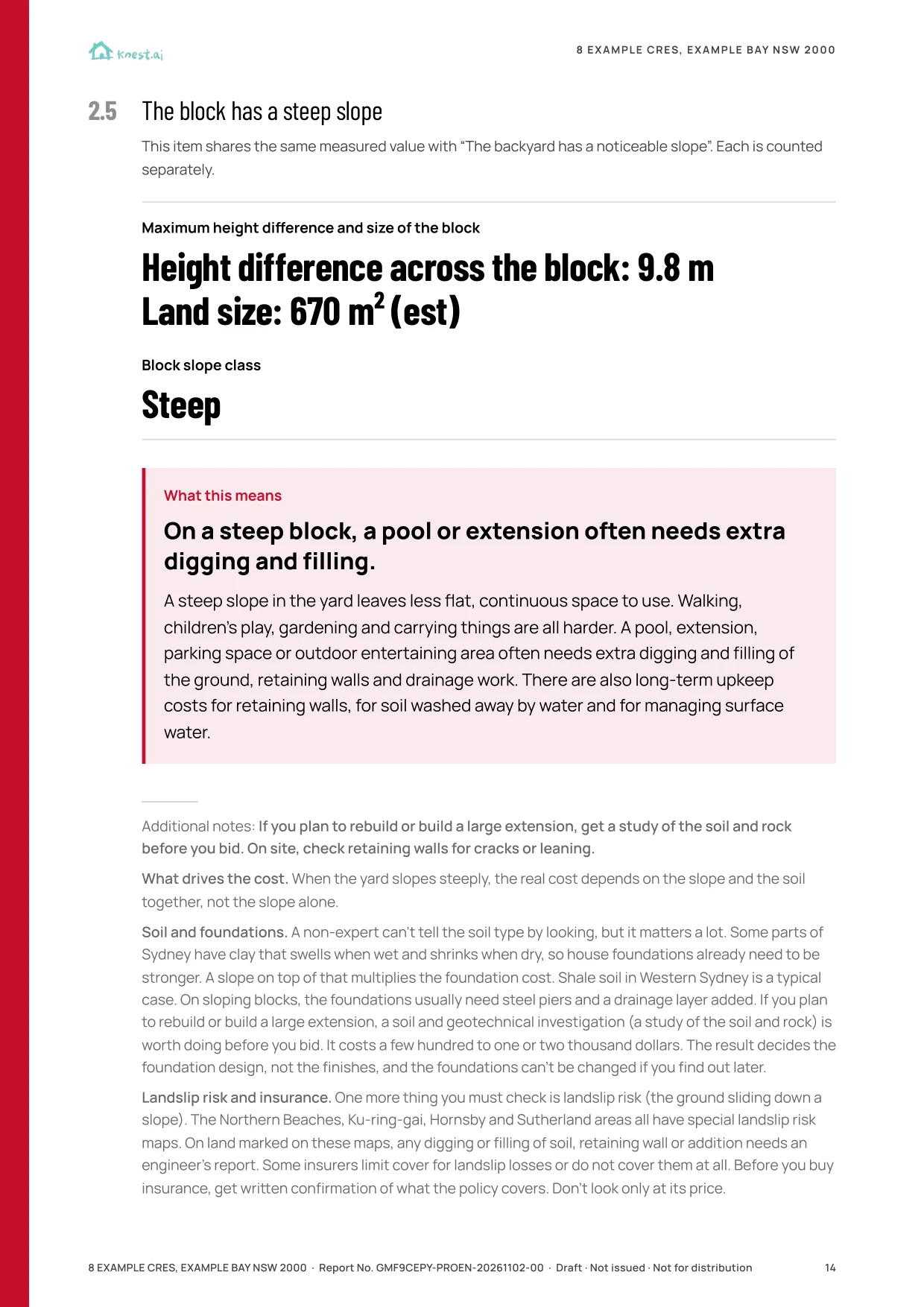
  2. A red flag page: a 9.8 metre height difference across the block, the recorded data, what it means and what to check before you offer

    Each flag. Recorded data, what it means in daily life and for value, and the check to run before you offer.

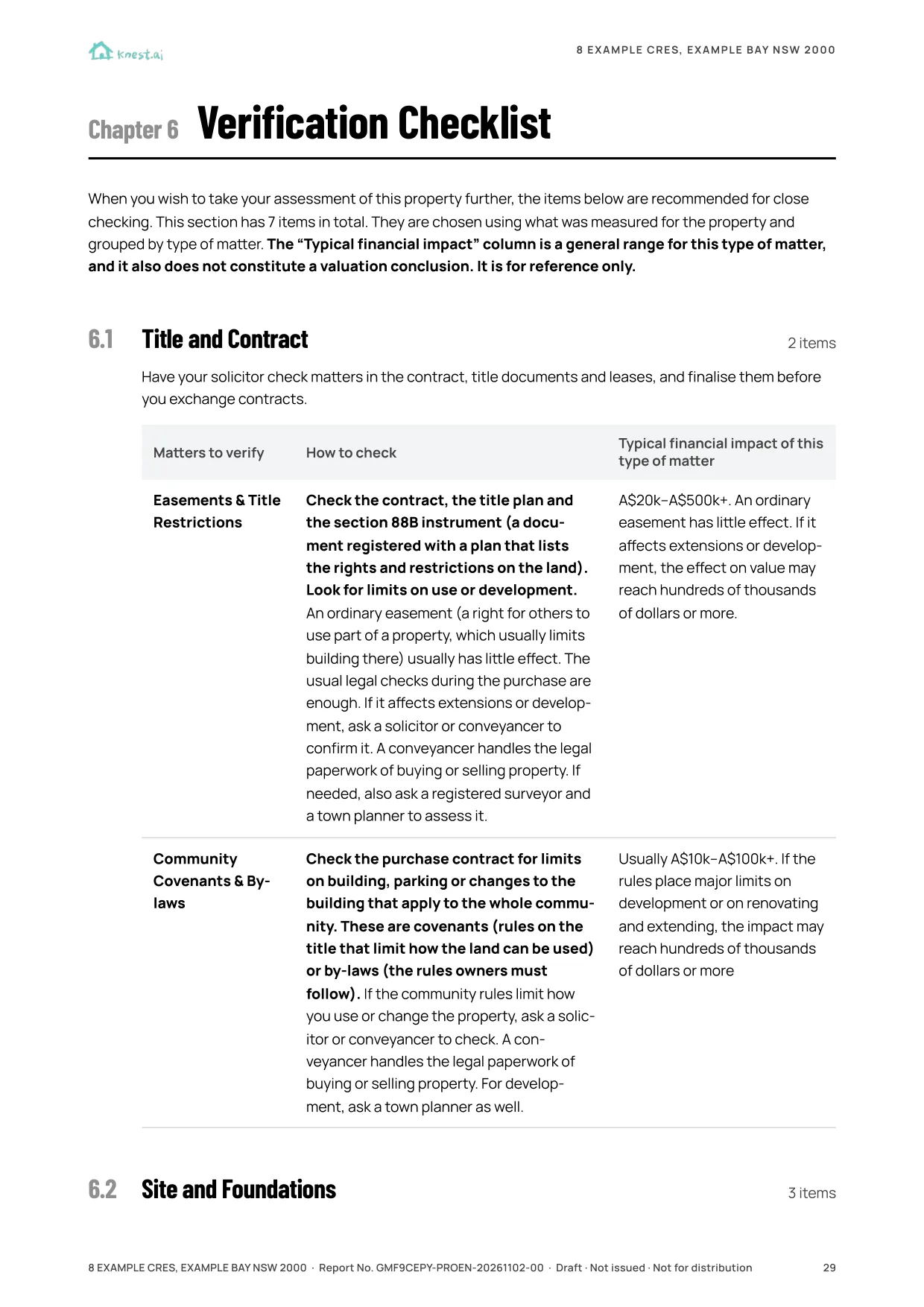
  3. The verification checklist page: matters to verify, how to check, and the typical financial impact

    The checklist. Seven matters to hand your solicitor, inspector and engineer, with the typical financial impact of each type.

Read the full sample report (PDF)

A couple outside a Sydney weatherboard house after an inspection, one holding a printed Red Flags Report
The sample report · address withheld

Seven red flags the open home didn’t show.

Five bedrooms, an ocean view, 670 square metres near the beach, loved on sight. The report rated every item. Seven came back red.

A steep block: 9.8 metres of fall.

A pool, an extension or a level lawn means digging, retaining walls and drainage before anything is built. The checklist sends a geotechnical or structural engineer to the foundations, with the typical range for that type of matter: $30,000 to $300,000 and up.

10.6 metres at the street, 30.7% narrower than the suburb.

Parking is harder, side access is tight, and a rebuild has less room than the land size suggests. The report compares it against other narrow blocks, not price per square metre.

Overlooked, on a T-junction, no covered outdoor room.

Several neighbours look into the backyard, headlights swing across the front at night, and a five-bedroom house with no covered indoor-outdoor area is a sore point for a family. Three flags you only feel after you move in, now on paper.

Seven reasons to look harder, written down. Or, with the ocean view, 264 square metres inside and 4 major strengths, seven things to price in with a clear head.

A five-bedroom house on a steep block. From the sample report prepared 2 November 2026. The sample replaces the real address.

Which report?

Three levels, one address. Start free, pay for depth only on the house you are serious about.

The knest.ai app

Free · in the app and on the web, instantly

Decide whether to look closer.

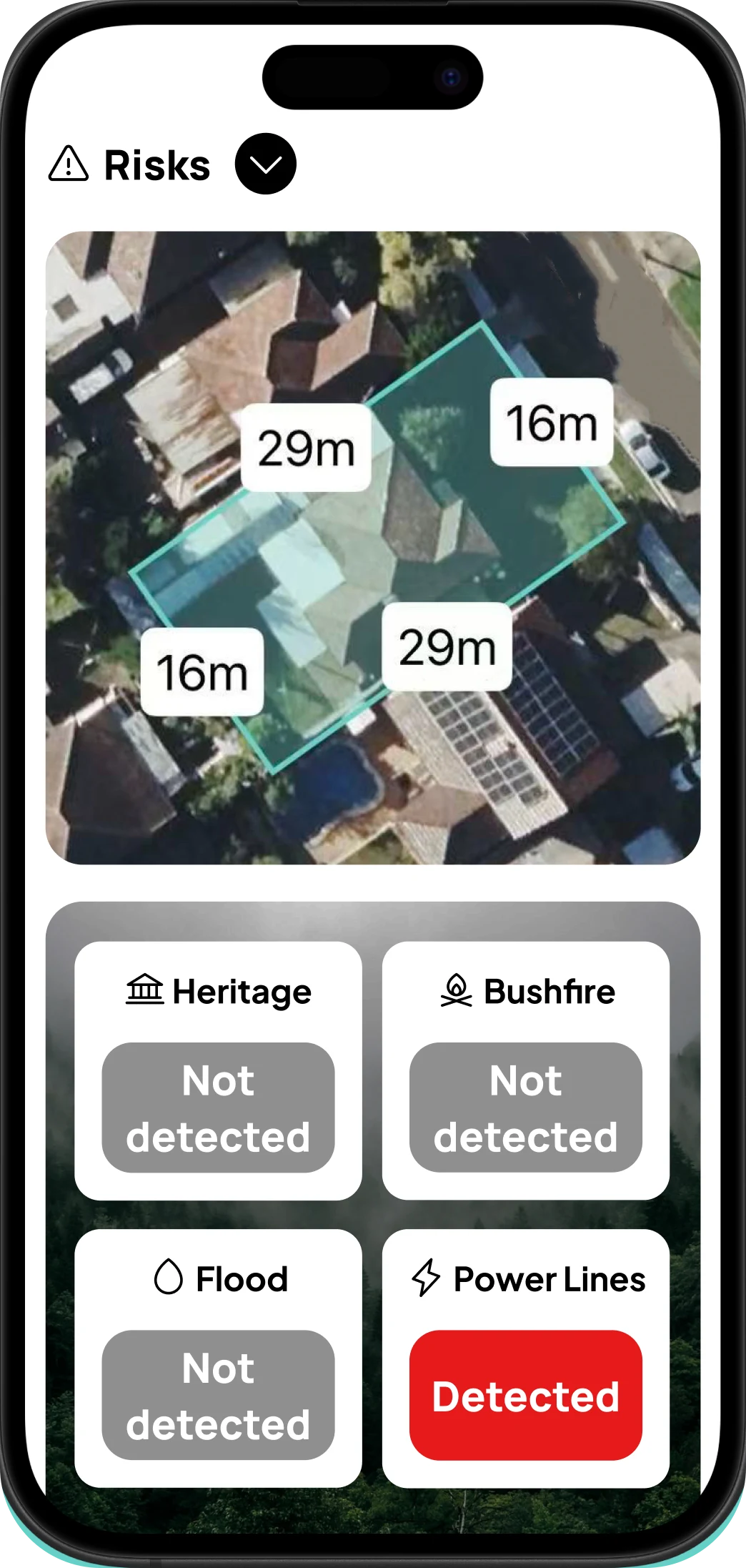
  • Flood, bushfire, heritage, zoning, noise and power-line flags on any NSW address
  • An indicative price estimate and the recent sales nearby
  • The AI buyer’s agent: ask anything about the address, any time
  • Every address, free, as you browse
Try it free
You’re here

Red Flags Report

$99 per address · 38 pages

Decide whether to go any further.

  • 100 data checks on the land, the rules, the building, the layout and the street, each rated red flag to major strength
  • What each flag means for living there and for value, in plain English
  • A verification checklist: what to check, who to ask, what it typically costs
  • The 3-minute brief: the whole house on one page, then 38 pages of working

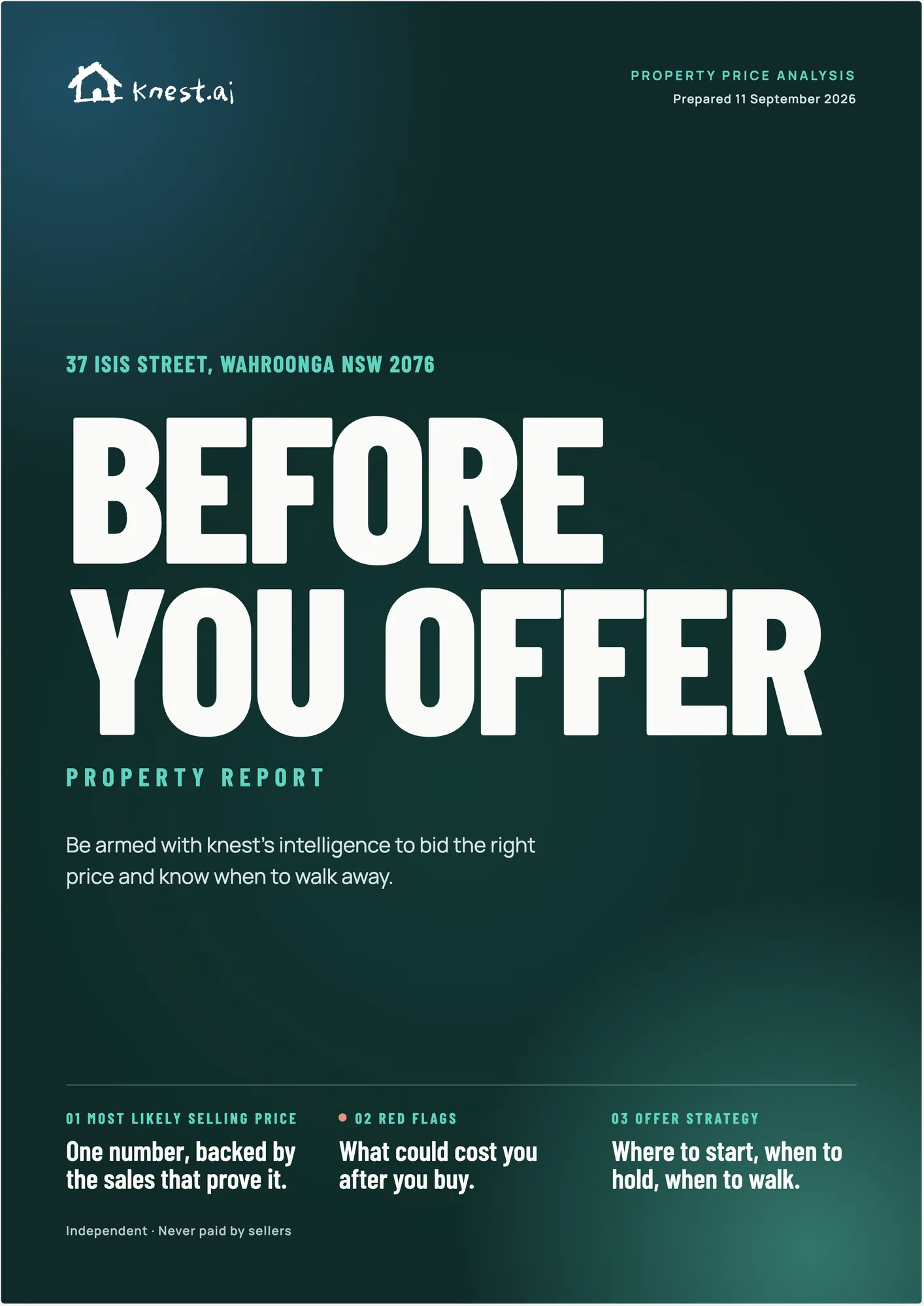
Before You Offer Report

$199 per address · 40 pages

Decide what to pay.

  • The most likely selling price with a range, from the six most similar recorded sales within 1 km
  • Every adjustment charted with the reason, cross-checked against two other estimates
  • Your pocket within the suburb, clearance rates and selling times
  • The buyer cheat sheet: where to stop, what justifies more, what to do on the day
See the report

Neither report is a valuation or advice. Both work alongside inspections and legal checks, not instead of them. Houses, duplexes and terraces within about 50 km of the Sydney CBD.

Get the report

One address, one report, bought here on the web. Tell us the house, pay by card, and the report is generated from the data as soon as you pay. It is in your inbox within 1 hour, and it stays in your account on the web and in the app.

Red Flags Report cover

How it compares

The $43 property report is a computer’s price estimate, the sale history and the suburb tables; nothing about the house is checked, rated or explained. The inspector sees the building and nothing else. This report is the hundred checks in between.

FeatureRed Flags Report$99Property profile report$43Site inspection$1,100Going without$730
100 checks on the land, the rules, the building, the layout and the street, each rated red flag to major strengthYesNone. A value estimate, the sale history, four recent salesNoFound out after you’ve paid
What each flag means for living there and for value, in plain EnglishYesNothing explained: tables, then the disclaimerNoGuesswork
A verification checklist: what to check next, who to ask, what that type of matter typically costsYesNoThe building onlyQuestions asked too late
About 38 pages on your house, in your inbox within 1 hourYesAutomated, instant, about 12 pagesA person, on siteNo
See inside the buildingNoNoYesNo

Published prices, AUD incl. GST, read 1 November 2026, top of the range shown. Property profile report: the $43 one-off report sold by the data vendor and issued through the banks: an automated value estimate with a range and a Low, Medium or High confidence, the sale and rental history, four recent sales and the current listings nearby, school catchments and suburb medians; no inspection, nothing rated (sample, Manly, August 2025; earlier samples 2016 and 2025). Going without: one building and pest inspection on a house you then walk away from, up to $730 for a Sydney house in 2026.

Read the full sample report (PDF)
Per address

$99AUD, incl. GST

Built from government, open and licensed data on the land, the rules and the street, for houses, duplexes and terraces within about 50 km of the Sydney CBD. Read it with your building inspection and your solicitor’s checks; it isn’t a valuation or advice.

  1. Tell us the address. Type the street and suburb; the order window finds the house and you confirm it is the one. Houses, duplexes and terraces within about 50 km of the Sydney CBD, one address per report.
  2. Pay by card. $99 AUD including GST, through Stripe Checkout: card, Apple Pay or Google Pay. The receipt is emailed. No account to set up first; your email is the sign-in.
  3. In your inbox within 1 hour. About 38 pages on your address, generated from the data as soon as you pay, with a download link, and kept under My reports on the web and in the app.
  4. If we can’t produce it, you aren’t charged. An apartment, or an address outside our coverage, is refunded in full to the card you paid with, and we tell you why.

Not sure which one you need?

Tell the AI buyer’s agent where you are up to with the property and it will say whether the risks or the price is the open question, and which report answers it.

Ask the AI buyer’s agent
FAQ

Red Flags Report questions, answered.

What is the Red Flags Report?

A pre-purchase property report for one Sydney house. It runs 100 data checks on the land, the building, the layout, the amenity, the area and the price, rates each from red flag to major strength, explains in plain English what each flagged item means for daily life and value, and ends with a verification checklist: what to verify, who to ask and the indicative cost of that type of matter.

How is it different from the free property insights?

The free insights flag that a risk exists. The Red Flags Report runs 100 data checks on the land, the building, the layout, the amenity, the area and the price, rates each from red flag to major strength, and explains what each flagged item means for daily life and value. It ends with a verification checklist: what to verify, who to ask, and the indicative cost of that type of matter. It is also a document you keep and can send to your solicitor.

Does it replace a building and pest inspection?

No. The report covers what public and licensed data can tell you about the land, the planning rules and the street. It does not see inside the building. It works alongside your building and pest inspection and legal checks, not instead of them, and the checklist tells you what to ask the inspector and your solicitor.

What if you can’t produce a report for my address?

Then you aren’t charged. If the address turns out to be an apartment, or outside the houses, duplexes and terraces within about 50 km of the Sydney CBD that we cover, anything already taken is refunded in full to the card you paid with, and we tell you why. App Store and Google Play purchases are refunded through the store; email customerservice@knest.ai for details. The terms are clauses 5.9 and 5.10 of our Terms and Conditions.

What are the "100 data checks"?

100 assessment items across land, building, layout, amenity, area and price: 90 core items on every house and supplementary items where they apply, each rated from red flag to major strength. The exact number varies by property and area. The 3-minute brief shows the tally on one page. They are data checks, not an on-site inspection.

What does "indicative cost" mean?

The verification checklist gives a general range for that type of matter, for example what an easement or a heritage control can add in time and fees. It is indicative, not a quote and not a valuation.

When should I buy it?

After the first inspection, before you go any further. You have seen the house and you like it; the next steps all cost money: the building and pest report, the contract review, the second visit, the finance. If the report rules the house out, you have saved all of them.

Which properties are covered?

Houses, duplexes and terraces in suburbs within about 50 km of the Sydney CBD. Apartments and townhouses are not supported yet. If a report can't be generated for an eligible house, you won't be charged.

Can I re-run it later?

The data changes: new sales, a new planning rule, a new listing. A re-run of the Red Flags Report on the same address is a new report at $99.

How is the report produced?

From NSW government data, open data, licensed data and our own analysis of listing plans and photos. The report is generated from that data against the rules our team has written, as soon as you pay, and it is in your inbox within 1 hour. It is a data report, not a valuation or advice.

Sources

  • Flood, bushfire and landslip layers, zoning, heritage and overlays, and nearby development applications come from NSW Government and council datasets listed at knest data sources.
  • What a flood zone means for an address in NSW: flood check by address.