
Hobartville NSW 2753
Hobartville, NSW 2753 is a residential suburb in Sydney’s Outer West within the Hawkesbury City Council area. It is dominated by separate houses, with no apartments recorded in the locality results, and has a rural-residential character with an urban built-up setting. The suburb shows generally average household income and a relatively family-oriented age profile, with notable English, Australian and Irish ancestry. Richmond station on the T1 Richmond/Windsor line is nearby, while buses are limited and CBD travel is lengthy. Richmond Marketplace and regional shopping in Richmond help serve residents.
The mix of houses and apartments that make up the Hobartville NSW 2753 property market, and the sale price range each achieved over the past 12 months.
How close Hobartville NSW 2753 properties sit to major roads or rail, and how much traffic noise that brings compared to properties set back from them.
Train, metro, light rail, ferry and B-Line services accessible from Hobartville NSW 2753.
"Houses" in this report includes detached houses, duplexes, and terraces.
How house lots across Hobartville NSW 2753 sit relative to street level — topography that affects drainage, flood risk, privacy, and build cost.
See which key planning overlays and environmental risks affect this suburb before you buy.
The share of Hobartville NSW 2753 houses within easy walking distance (1.2km) of a train station.
The 20-year trend in median house sale prices across Hobartville NSW 2753, tracked separately from apartments.
Typical land characteristics and common property features across Hobartville NSW 2753.
How property prices vary across the different pockets of Hobartville NSW 2753, and how each pocket compares.
The top 3 highest house sales in Hobartville NSW 2753 over the past 24 months.


75 popular houses in Hobartville NSW 2753
Where apartment projects are concentrated across Hobartville NSW 2753, with project-level sales context.
The median weekly rent for apartments in Hobartville NSW 2753.
The largest apartment projects in Hobartville NSW 2753, ranked by number of lots.
Median age, household income, and the renter-versus-owner split that shape the Hobartville NSW 2753 community.
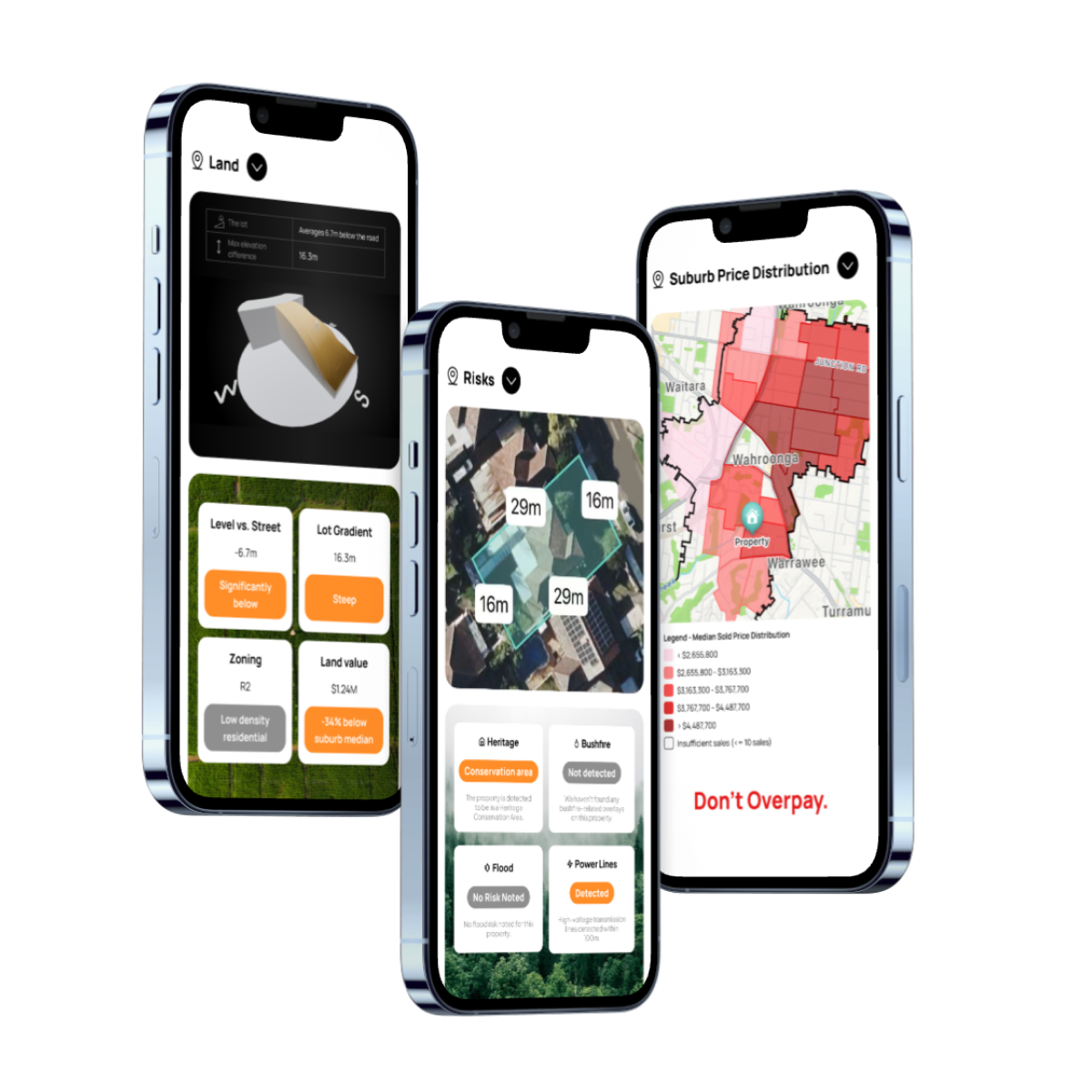
Get the knest.ai app
Gain ultimate insights into any property
Buyer-focused property platform identifying risks, price estimates, 3D land maps and more to help you make smarter decisions — completely free.

Living in Hobartville NSW 2753: Suburb Profile & FAQs
Common questions about living in and buying property in Hobartville NSW 2753 — lifestyle, transport, schools, and the housing market.
Note: Data is sourced from the Australian Bureau of Statistics (ABS) 2021 Census data and knest.ai internal statistical data.
Is Hobartville NSW 2753 a good suburb for families?
Hobartville NSW 2753 is a solid suburb for families, especially for buyers who want a detached house environment and strong school appeal. The suburb scores 8 out of 5 for primary education and 10 out of 5 for secondary education in the supplied data, which points to a very strong schools profile for family buyers thinking long term. Children are also a visible part of the local population, with 6.8% aged 0 to 4 and 14.6% aged 5 to 14, while the average household size of 2.6 suggests a genuine family presence rather than a purely transient market. Housing is also a major plus, with separate houses making up 100% of the dwelling mix. The trade-off is that Hobartville is not the strongest suburb if safety and everyday convenience are your top priorities, with safety rated 2 out of 5 and walkability relatively low. So while Hobartville can work well as a good suburb for families wanting space and schooling, buyers should be comfortable with a quieter, more car-dependent setting.
What is it like to live in Hobartville NSW 2753?
Living in Hobartville NSW 2753 feels practical, low-rise, and suburban rather than polished or high-energy. The suburb character is described as rural residential, and with an urban built-up setting plus no beach access, the lifestyle leans more toward day-to-day function than standout lifestyle prestige. Hobartville sits in Sydney’s Outer West, and the local feel appears modest and straightforward rather than highly walkable or entertainment-focused. Walkability, retail, and culture all sit at 2 out of 5, which suggests most residents are likely relying on nearby centres rather than doing everything within the suburb itself. That said, some buyers actively want this kind of environment. Hobartville may appeal if you prefer a quieter detached-house suburb with less density and less apartment turnover. The trade-off is that living in Hobartville may feel less vibrant or convenient than inner or middle-ring suburbs, so buyers wanting café culture, stronger retail choice, or a more walk-everywhere lifestyle may find it limited.
Is Hobartville NSW 2753 well connected for commuting?
Hobartville NSW 2753 is mixed rather than especially well connected for commuting. The suburb has nearby train access on the T1 Richmond/Windsor line, which is useful for buyers who want a public transport option, but it does not have metro, light rail, or ferry service. Bus coverage is listed as limited, so the transport picture is functional rather than flexible. The average commute to the Sydney CBD is around 100 minutes by public transport and 60 minutes by car, which tells you Hobartville is better suited to buyers who do not need a fast daily city run. For some households, that will be perfectly acceptable. If you work locally, commute only a few days a week, or mainly drive, Hobartville can still be workable. The trade-off is clear though: compared with suburbs closer to major transport hubs, Hobartville asks commuters to accept longer travel times and fewer transport modes in exchange for a more house-based Outer West setting.
Who does Hobartville NSW 2753 suit best?
Hobartville NSW 2753 suits buyers who want a house-focused suburb with a practical suburban profile, especially families and owner-occupiers who value space more than density or inner-city convenience. The housing mix is very clear, with 100% separate houses and no apartment share in the supplied data, so Hobartville is much more aligned with buyers looking for land, backyard potential, or a traditional family-home setting. The median age is 35, which supports a settled working-age profile, and the median family income of $1,609 per week suggests a middle-income market rather than an ultra-premium one. Occupation patterns are also broad and practical, led by trades workers at 18%, then professionals at 15.5%, and labourers at 13%. The trade-off is that Hobartville may suit downsizers wanting low-maintenance living or buyers seeking a more urban professional lifestyle less well. With renting at 29.6%, it is not overly transient, but it is also not the kind of suburb defined by apartment living, prestige density, or strong lifestyle buzz.
What are the pros and cons of living in Hobartville NSW 2753?
The main trade-off in Hobartville NSW 2753 is that you get a full house-based suburban setting, but you give up some convenience, transport variety, and lifestyle intensity. On the plus side, Hobartville offers a very clear housing identity, with 100% separate houses, which is attractive for buyers who want more traditional family accommodation rather than apartments. It also has strong school ratings in the available data, which adds weight for education-focused buyers. For people who want a practical suburb in the Outer West with a straightforward residential feel, that can be a real advantage. The compromise is that everyday amenity looks modest. Safety, walkability, retail, and culture are each rated 2 out of 5, buses are limited, and the CBD commute is long by Sydney standards. That means buyers who prioritise a walkable lifestyle, shorter public transport trips, or a more vibrant local scene may feel the drawbacks more sharply. Hobartville can still be a very good fit, but it suits buyers who are comfortable making that exchange.
What are property prices like in Hobartville NSW 2753?
Property prices in Hobartville NSW 2753 look mid-range by Sydney house standards, with recent sales suggesting a relatively accessible entry point for buyers wanting a freestanding home. In the last six months, the supplied sales history shows 12 house sales with a median price of $955,000, an average price of about $959,500, and most sales sitting between roughly $920,000 and $1,035,000. The upper end of recent house sales reached about $1,055,000, with the maximum at $1,082,000. Based on that, buying property in Hobartville appears more achievable than many established family-house suburbs closer to the CBD. That pricing tells a practical story. Hobartville house prices may appeal to buyers chasing land and a detached home without moving into Sydney’s premium brackets. The trade-off is that the lower price point comes with compromises in commute time, walkability, and local amenity compared with more connected suburbs. For buyers prioritising house value over inner-city convenience, though, Hobartville stands out as a sensible option.
22 surrounding suburbs near Hobartville NSW 2753
39 streets in Hobartville NSW 2753